Luxury Office Interior Design in Dubai: Our Modern CEO Office Project
In a city where business culture values precision, image, and comfort, the executive office carries special weight. It is the place where first impressions are formed, private meetings take place, major decisions are made, and company identity is felt in physical form. For this luxury office interior design in Dubai, our goal was to create a CEO office that reflects that level of responsibility while offering warmth, clarity, and a strong architectural presence.
This concept for a modern executive office brings together dark timber, expressive marble, soft upholstery, filtered daylight, and sculptural lighting. The result is a refined workplace with a clear sense of authority, balanced by comfort and hospitality. The project shows how an office can feel polished and welcoming at the same time.
A CEO office designed as an executive suite
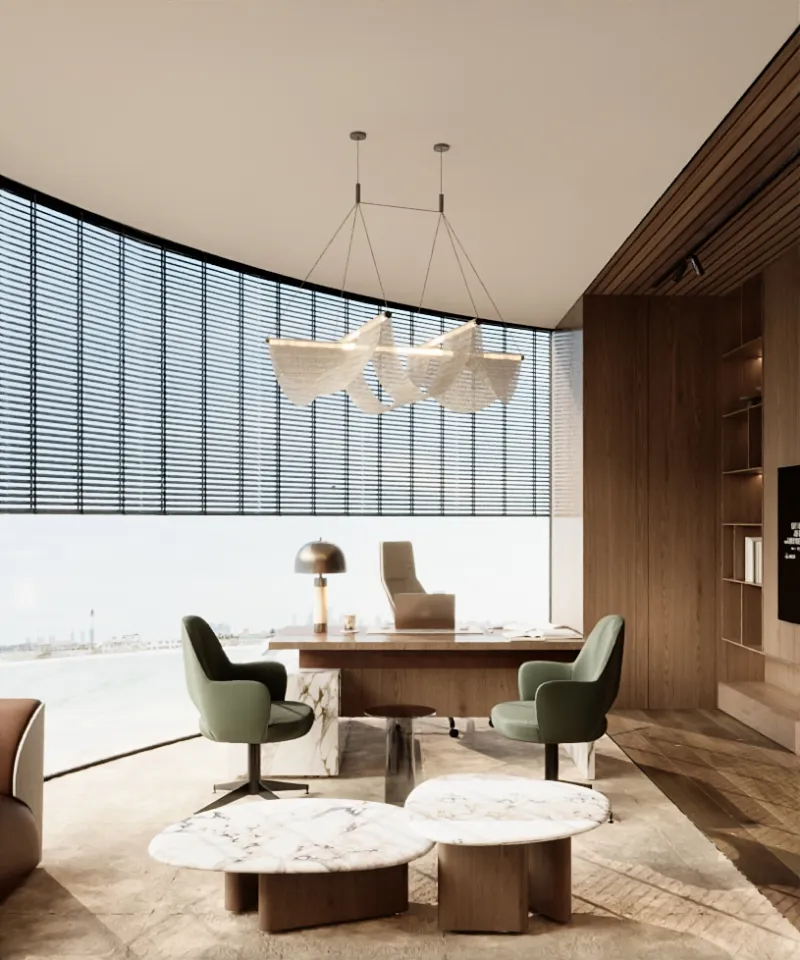
One of the main ideas behind this project was to move away from the old model of the isolated executive office. Instead of creating a single desk-focused room, we planned the space as a compact executive suite. The office includes a primary work area, guest seating at the desk, and a separate lounge setting for quieter conversations.
That planning decision changes the entire character of the room. The office becomes suitable for formal meetings, one-to-one discussions, short reviews, client conversations, and private reflection. In a senior leadership setting, that flexibility matters. The space has to support business performance, but it also has to support relationship building.
The main desk sits near the full-height glazing, giving the CEO a strong visual connection to the skyline and daylight. Behind and beside that zone, the timber-lined envelope provides privacy and a sense of enclosure. This balance between openness and shelter is central to the project.
The role of space, proportion, and presence
Luxury in office interiors often depends less on decoration and more on proportion. In this project, the room is defined by generous spacing, low visual clutter, and carefully controlled composition. Each piece has enough space around it to register clearly. This gives the office a composed atmosphere without making it feel empty.
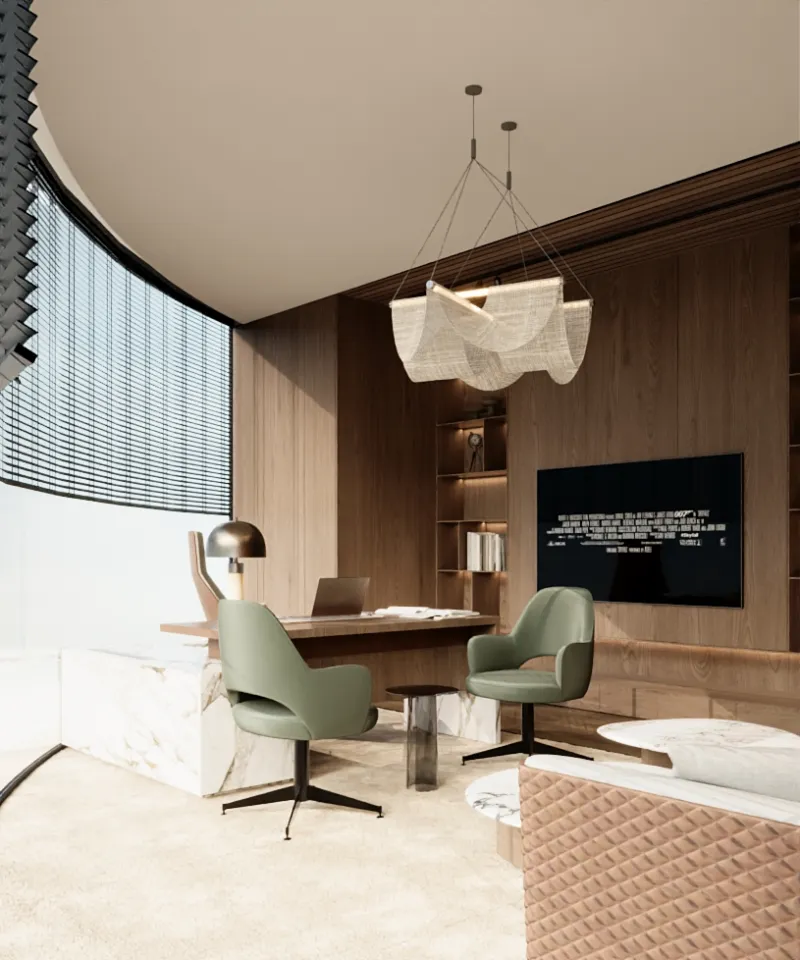
The desk has an important role in that balance. It is substantial, but not oversized. It creates presence through material and form rather than sheer bulk. The guest chairs are placed close enough for conversation to feel direct and productive. The layout avoids the old executive formula where a massive desk becomes a barrier between people.
In front of the desk, a pair of low tables and a soft seating layer help establish a second mode of interaction. This allows the room to shift from formal to relaxed without losing its identity. That transition is one of the reasons the concept works well for high-level leadership environments.
Material palette: warmth, texture, and control
Material selection was one of the defining parts of this concept. The palette is restrained, but rich in contrast. The main finishes include:
- dark wood wall cladding and ceiling elements
- pale marble with bold natural veining
- cream and beige upholstery
- muted green guest chairs
- bronze-toned accents
- smoked transparent side table elements
- woven sculptural pendant lighting
The wood provides depth, warmth, and a grounded architectural background. It gives the office a calm, serious tone and reinforces the private character of the executive setting. The marble adds visual strength and permanence. Rather than using stone in many small applications, the design concentrates it into a few major pieces, especially at the desk and tables. That gives the stone real impact.
The softer materials are equally important. Upholstered seating, area rugs, and the woven quality of the pendant lighting prevent the room from feeling hard or overly formal. In a luxury office in Dubai of this type, comfort must be visible. Clients and guests should feel at ease the moment they enter, and the person using the office every day should never feel trapped in a purely corporate environment.
A signature desk for a modern executive office
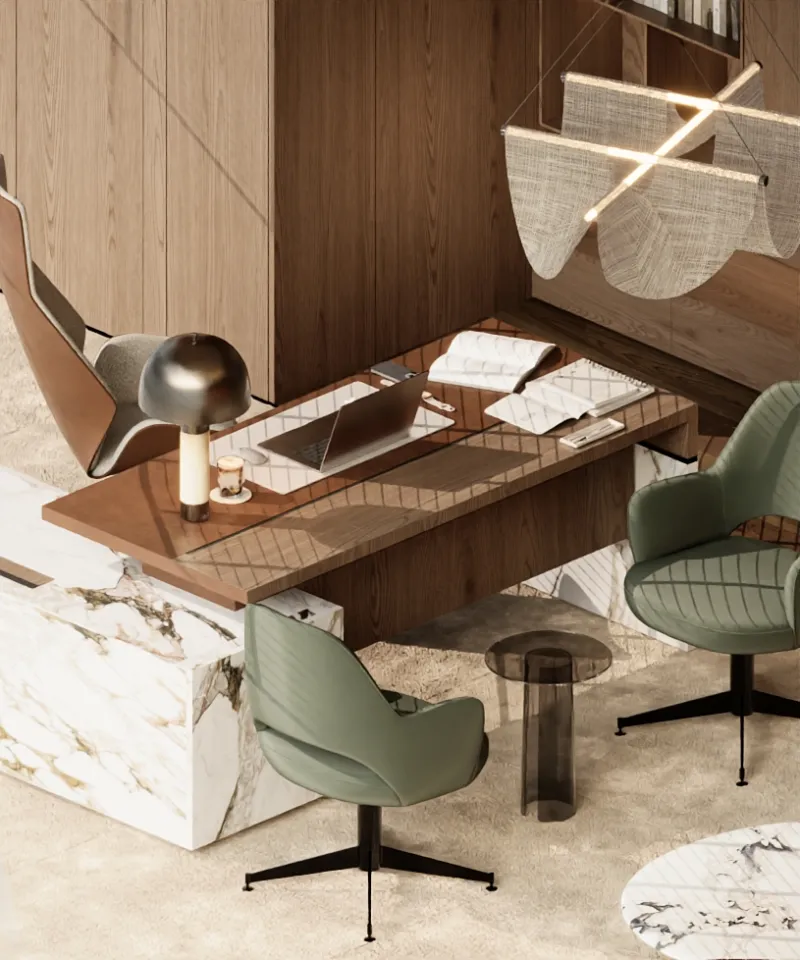
At the center of the project is a desk that combines timber and marble in a way that feels both practical and ceremonial. The timber top and body introduce warmth and familiarity. The marble support volumes give the piece a sense of mass and permanence. Together, they create a desk that feels appropriate for a CEO office in Dubai: refined, confident, and visually memorable.
The styling of the desk is deliberately disciplined. A laptop, selected documents, a writing tool, a sculptural lamp, and a few personal objects are enough to complete the scene. This clean arrangement supports the larger design message of focus and clarity. The desk is not treated as a display surface. It is treated as a command point within a well-composed room.
The close-up views of the project also show how light moves across the desk surface. Reflections from the blinds animate the top, linking the furniture to the architecture and giving the work zone a subtle sense of movement throughout the day.
Natural light as a design element
Any discussion of luxury office interior design in Dubai has to address daylight. In this project, the perimeter glazing is one of the mportant architectural features. It brings scale, openness, and prestige to the office, but it is carefully moderated through horizontal blinds.
These blinds do several jobs at once. They reduce glare, soften the brightness of the exterior, create visual privacy, and produce a strong linear pattern that becomes part of the interior composition. The shadows they cast across the desk, rug, seating, and lounge area create depth and rhythm without the need for additional decorative devices.
This approach is especially relevant in Dubai, where solar exposure can be intense. Good executive office design must treat daylight as both an opportunity and a technical challenge. Here, filtered light becomes one of the project’s defining atmospheric features.
Sculptural lighting with a soft visual language
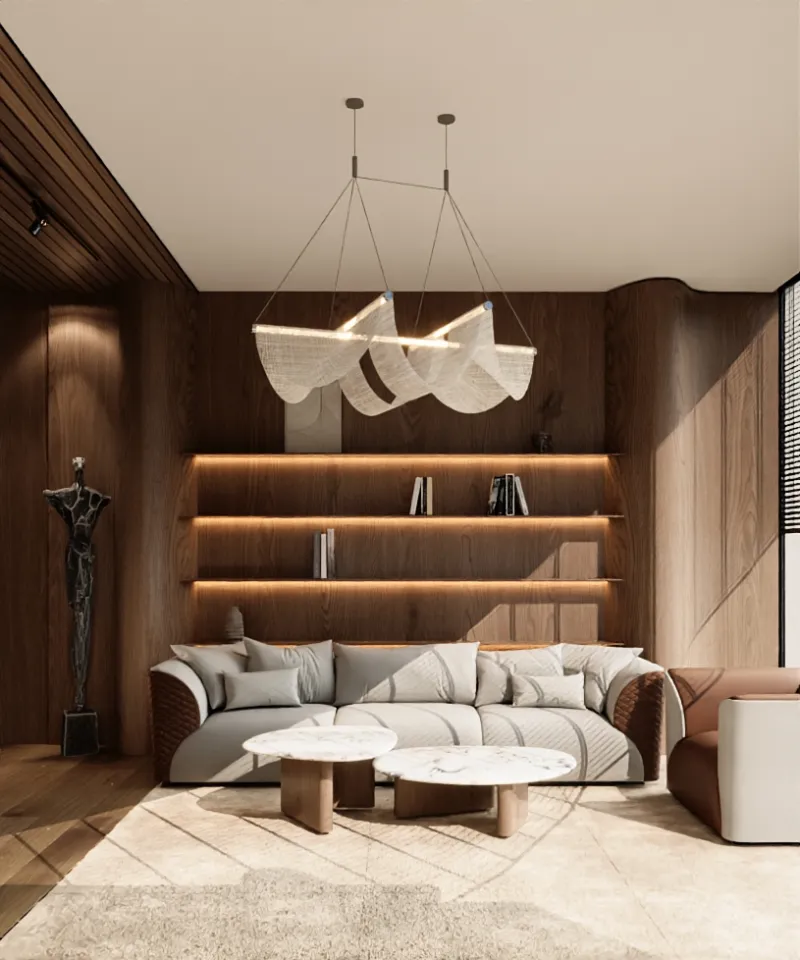
The suspended feature light is one of the distinctive elements in the office. Its floating woven forms surround linear light sources, creating an object that feels artistic, light, and contemporary. It introduces softness into a room built from strong architectural lines.
This contrast is valuable. The office envelope is defined by long shelves, timber planes, clean edges, and structured geometry. The pendant interrupts that order with movement and tactility. It becomes a visual focal point over both the desk area and the lounge zone, giving the project a clear signature.
The lighting strategy goes well beyond the pendant. Integrated shelf lighting adds warmth to the timber wall, while the desk lamp creates a more intimate layer at working height. Together with daylight, these sources build a room that can shift naturally from bright daytime productivity to evening hospitality.
Executive seating that supports both comfort and image
Furniture selection in a CEO office should express role, but it also needs to support conversation. In this concept, the executive chair has a taller and more structured presence than the guest chairs, giving the CEO position a quiet visual distinction. The guest chairs, finished in muted green upholstery, are softer and more embracing in form.
This makes the office feel approachable without reducing its authority. The green seating also introduces a controlled color accent into the room. Against the wood, marble, and neutral palette, that note of color feels fresh and grounded. It brings life to the composition without disrupting it.
In the lounge area, the sofa offers a different kind of comfort. It is deep and generous, but still formal enough for professional use. This matters in a private office, where some discussions benefit from leaving the desk and moving into a calmer seating arrangement.
The lounge area and the hospitality layer
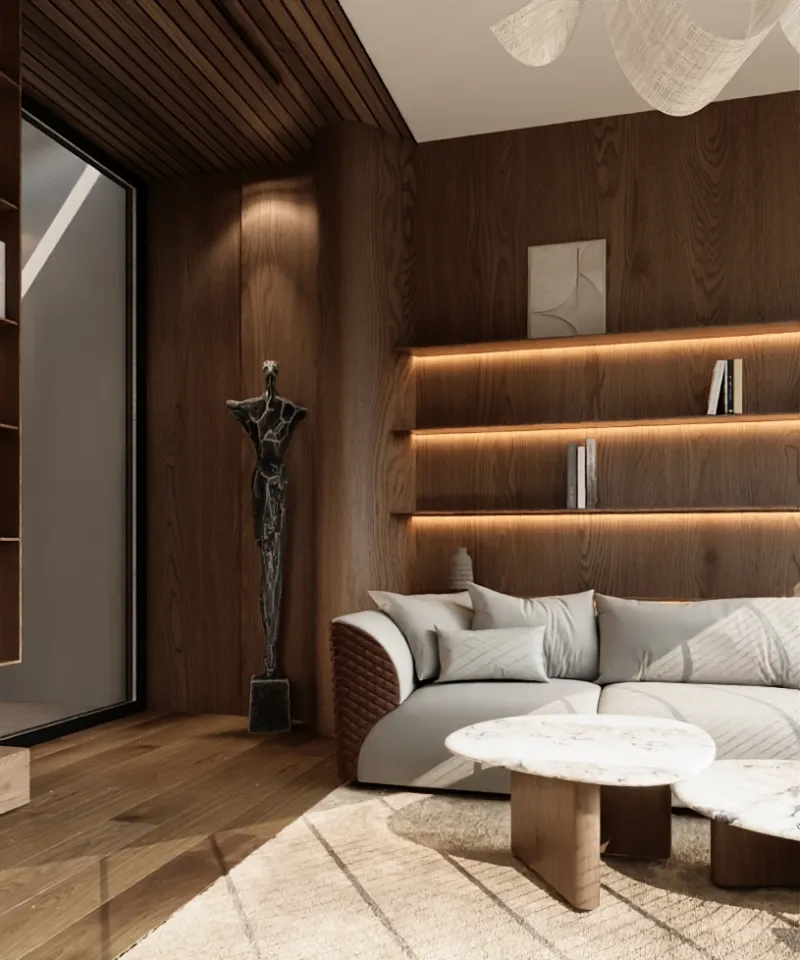
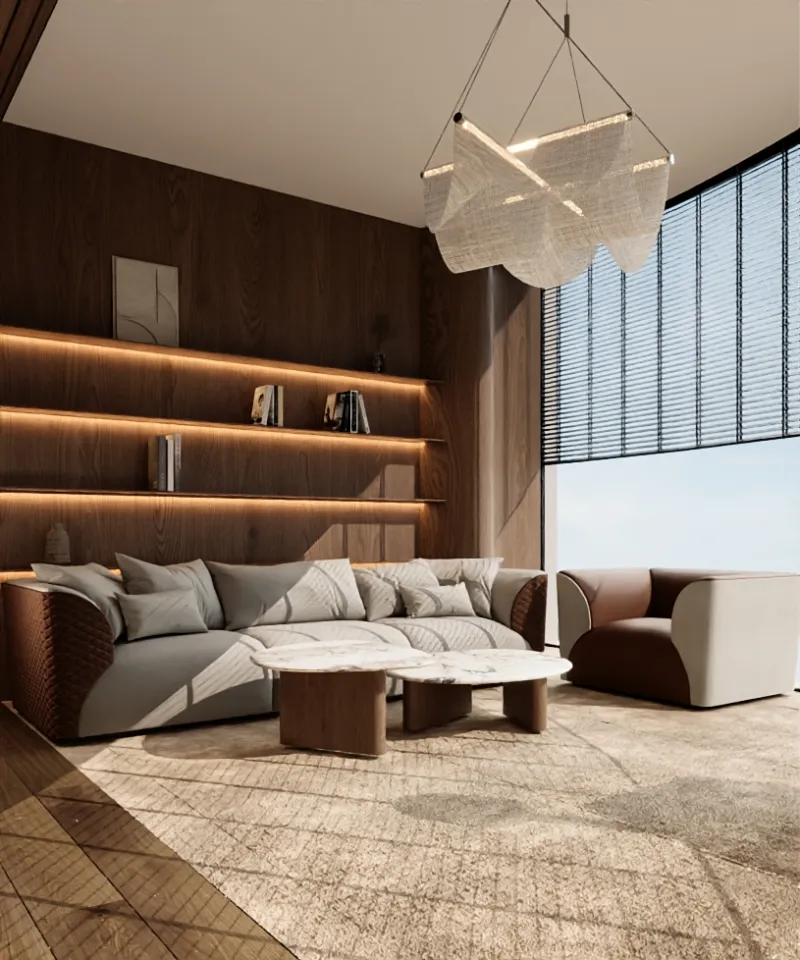
One of the strongest parts of the project is the lounge setting. A large sofa placed against a timber wall with illuminated shelving creates a private hospitality zone within the office. This is not a decorative afterthought. It is a functional part of the space.
The lounge makes the office suitable for more personal meetings, strategic conversations, short waiting periods, or discussions that require a less formal setting than the desk. In senior business environments, that shift in tone can make a real difference.
The marble coffee tables repeat the language of the desk, helping both zones feel part of the same design family. Art objects and shelves are used sparingly, which keeps the composition refined and avoids visual overload. This controlled styling supports the larger message of executive confidence and careful curation.
Why this project reflects luxury office interior design in Dubai
Dubai offices often need to do several things at once. They must reflect success, support international business culture, respond to climate conditions, and offer a level of finish that clients immediately recognize. This project responds to those demands through design decisions that are both visual and practical.
The office projects status through material quality rather than ornament. It uses daylight intelligently. It combines formal meeting space with hospitality. It feels international in tone, yet appropriate for the regional expectation of high finish and strong presentation. Most importantly, it creates a workspace that supports how leadership actually operates today.
For companies searching for luxury office interior design in Dubai, this type of executive space offers a strong model. It is polished but comfortable. It is contemporary but not cold. It has a clear identity without resorting to excess.
Conclusion
This modern CEO office concept was designed to express authority, comfort, and architectural clarity in equal measure. With its timber-lined envelope, marble detailing, filtered daylight, sculptural lighting, and layered seating, the project presents a strong example of luxury office interior design in Dubai.
It is a workplace shaped for leadership, but also for dialogue. It supports focused work, client engagement, and private conversation within one coherent setting. That balance is what gives the project its strength.
For businesses planning a premium executive office, the message is simple: the right interior does not rely on visual excess. It relies on proportion, atmosphere, material discipline, and a clear understanding of how the space will be used every day.