Dubai Office Interior Design Case Study: A Travel Agency with a Lounge Concept
A travel agency office needs to do far more than provide desks, chairs, and a place for client meetings. It has to create confidence from the first moment. Clients arrive with personal plans, business trips, family holidays, ticket changes, and premium travel requests. The interior should make them feel welcomed, supported, and comfortable enough to discuss details properly.
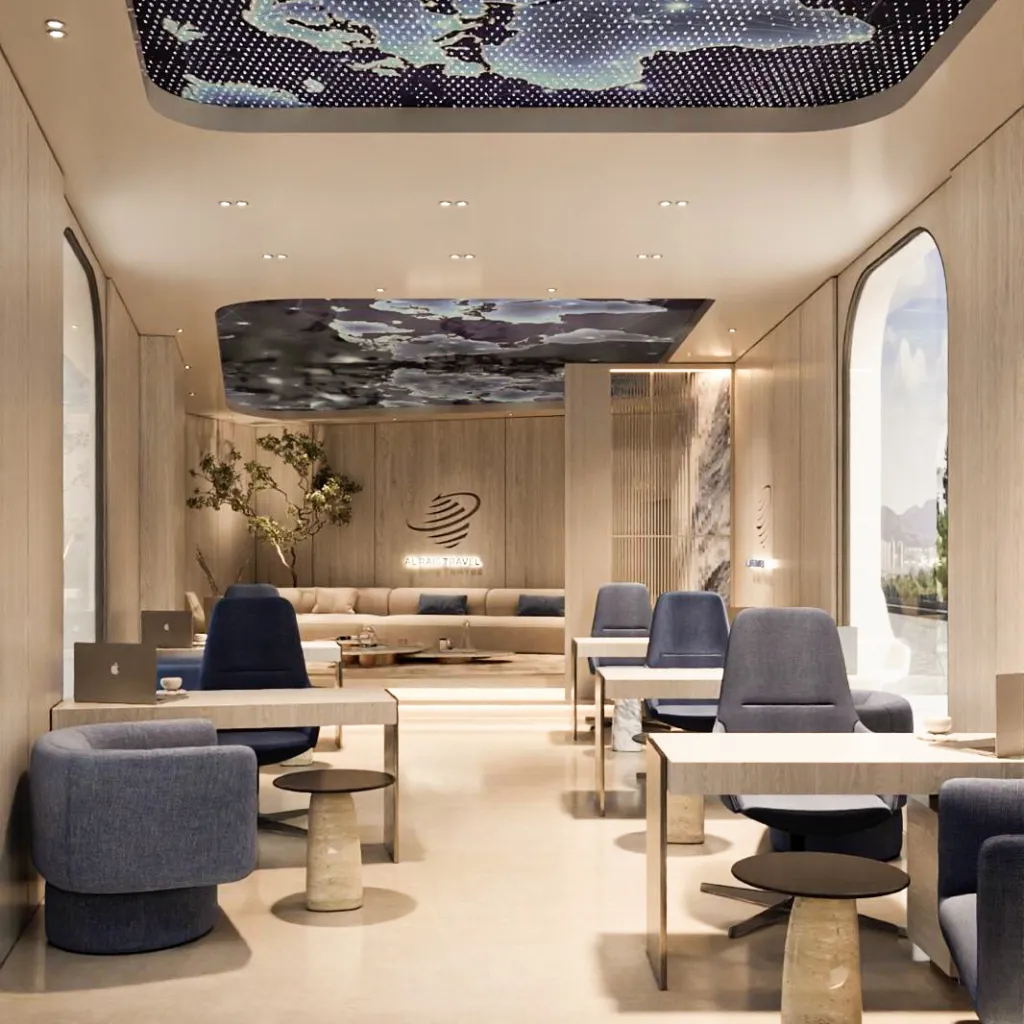
For this Dubai travel agency interior design project, our team developed an office concept that combines the practicality of a working agency with the comfort of a premium lounge. The result is a warm, luxury, client-focused space where travel consultation feels personal, relaxed, and professional.
The interior design is built around a clear idea: a travel agency should feel connected to movement, destinations, global service, and hospitality. Instead of creating a standard office layout with a reception counter and simple workstations, the space was planned as a sequence of private-feeling consultation desks, soft visitor seating, a lounge area, branded wall features, and a dramatic ceiling concept inspired by the world map.
A Travel Agency Interior with a Lounge Identity
The main design direction for this project was to move away from the traditional office feeling. Travel is connected with comfort, planning, anticipation, and personal service, so the interior needed to support those emotions.
The office was designed as a premium consultation lounge. Clients do not simply approach a counter and leave quickly. They are invited to sit comfortably, speak with a travel advisor, review options, and take time with the process. This is especially important in Dubai, where many travel agencies serve families, corporate clients, VIP travellers, and clients looking for carefully arranged travel experiences.
The lounge concept gives the company a softer and more client-oriented image. Upholstered chairs, rounded armchairs, small side tables, warm lighting, and a comfortable waiting area make the agency feel closer to a hospitality space than a purely administrative office. This approach helps the company communicate care, trust, and attention to service.
Space Planning and Layout Solution
The office has a long rectangular layout, so the planning had to be clear and efficient. A long space can easily feel narrow or corridor-like, especially when many desks are required. For this project, the layout was organized into several zones that guide the client naturally through the interior.
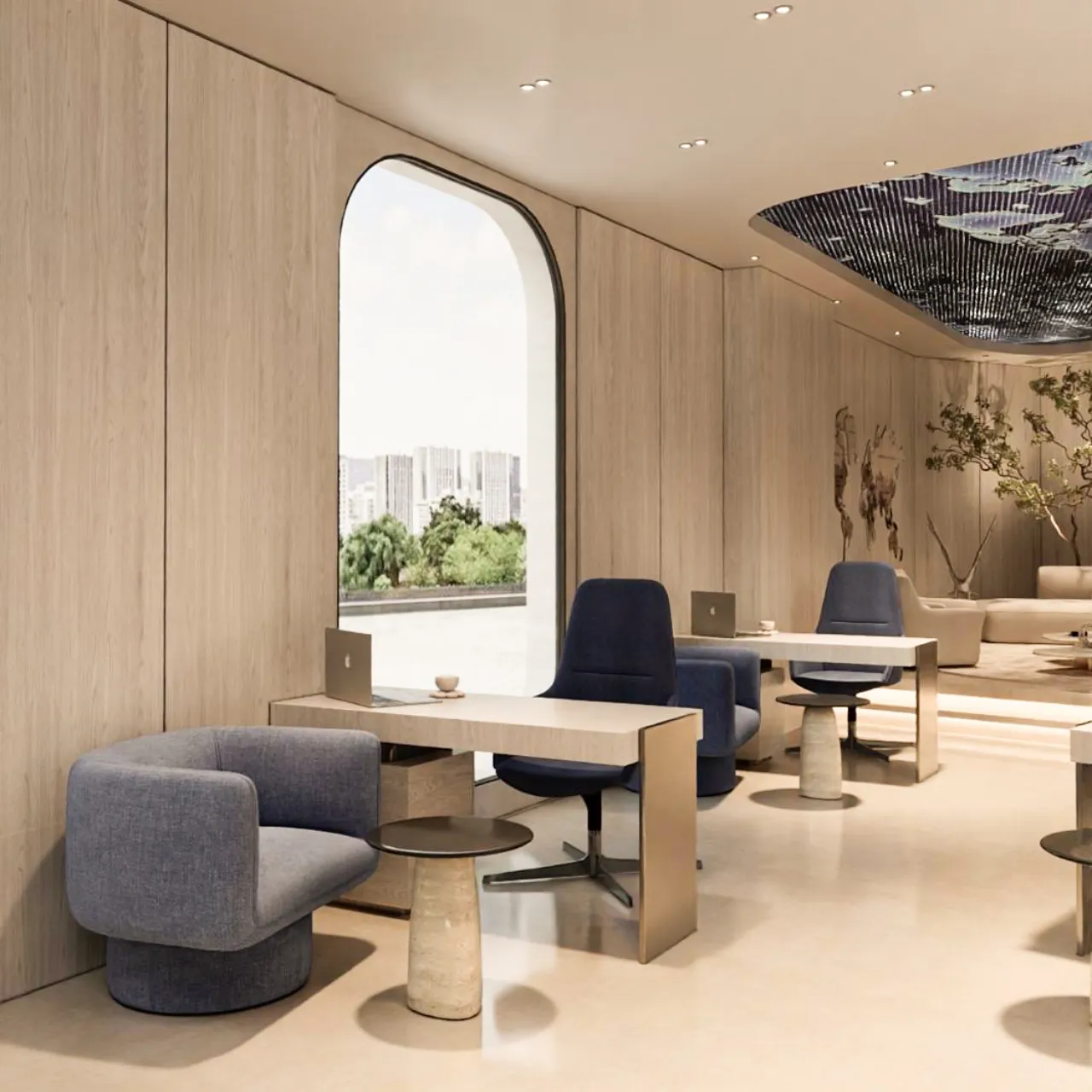
The consultation area occupies the front and middle part of the office. Desks are placed along the sides, leaving a clear central walkway. This keeps circulation easy and prevents the space from feeling overcrowded. Each workstation is designed as a personal meeting point between the travel advisor and the client.
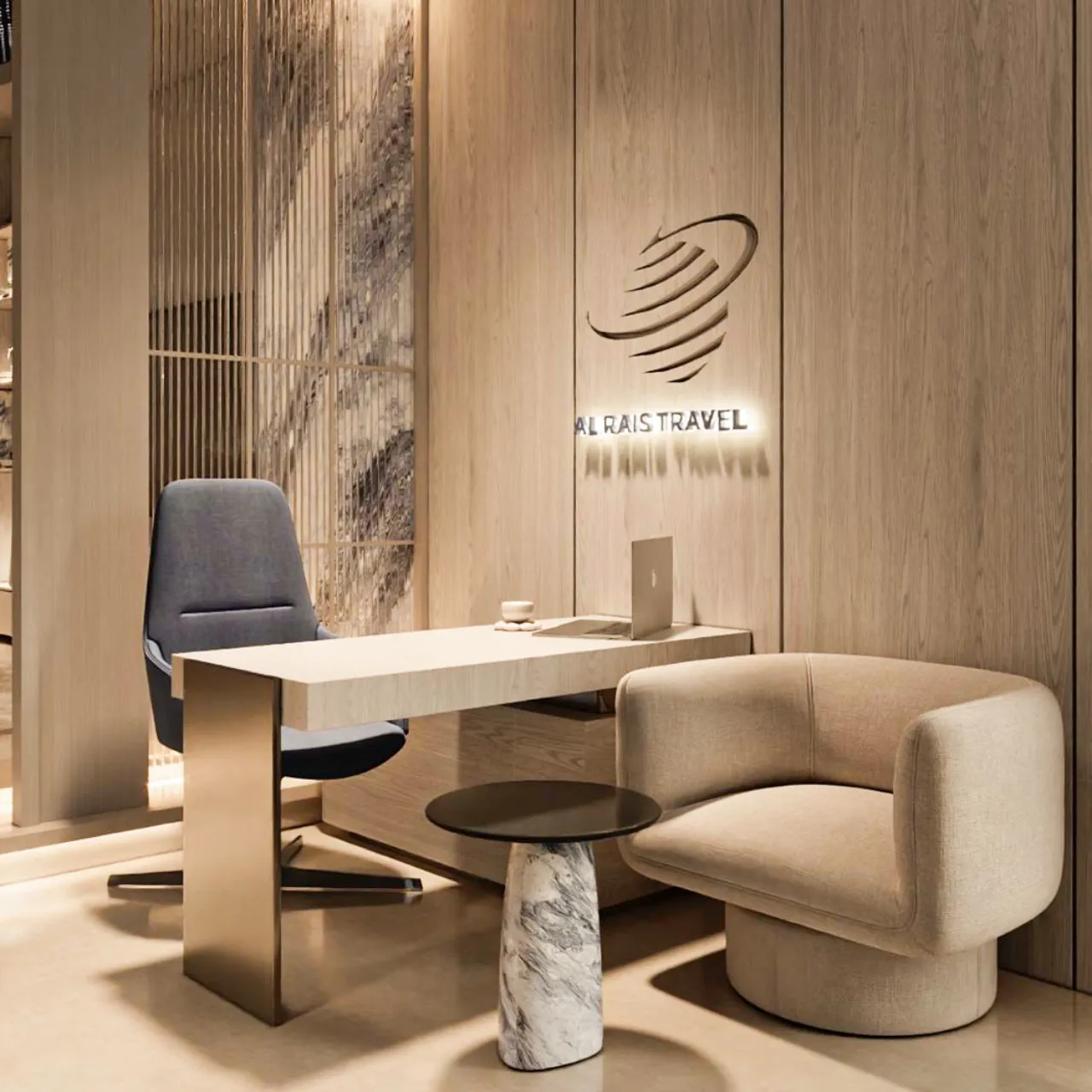
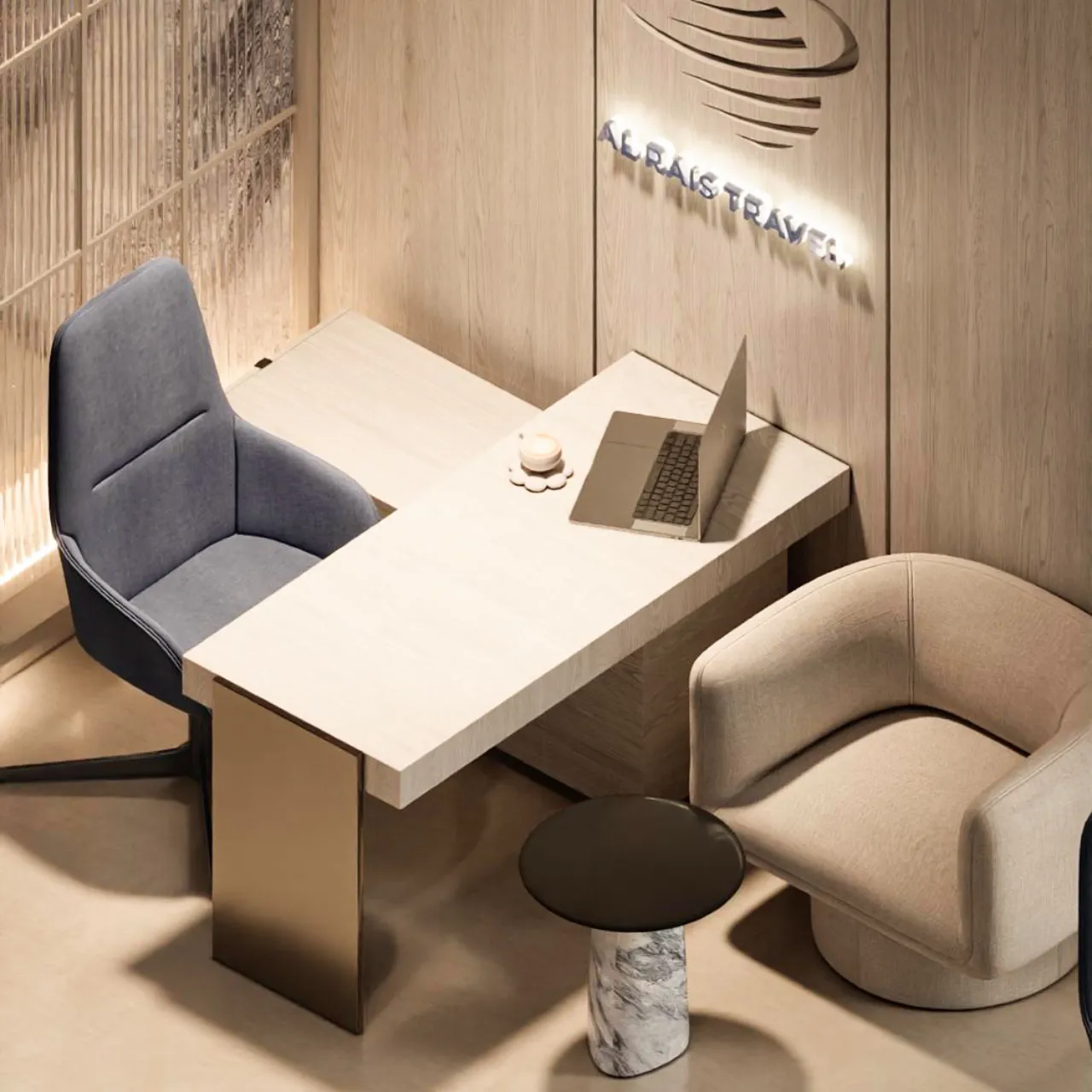
The desks are not treated as basic office furniture. They are designed as luxury consultation tables with light wood tops, champagne-toned metal supports, and integrated storage blocks. This gives each desk a premium appearance while keeping it practical for laptops, documents, passports, phones, and printed travel materials.
The visitor seating is also important. Instead of standard guest chairs, the design uses soft upholstered lounge chairs and rounded armchairs. This makes the client side of the desk more comfortable and helps the meeting feel less formal. Small side tables are placed near the seating areas, allowing clients to place coffee, phones, bags, or documents beside them.
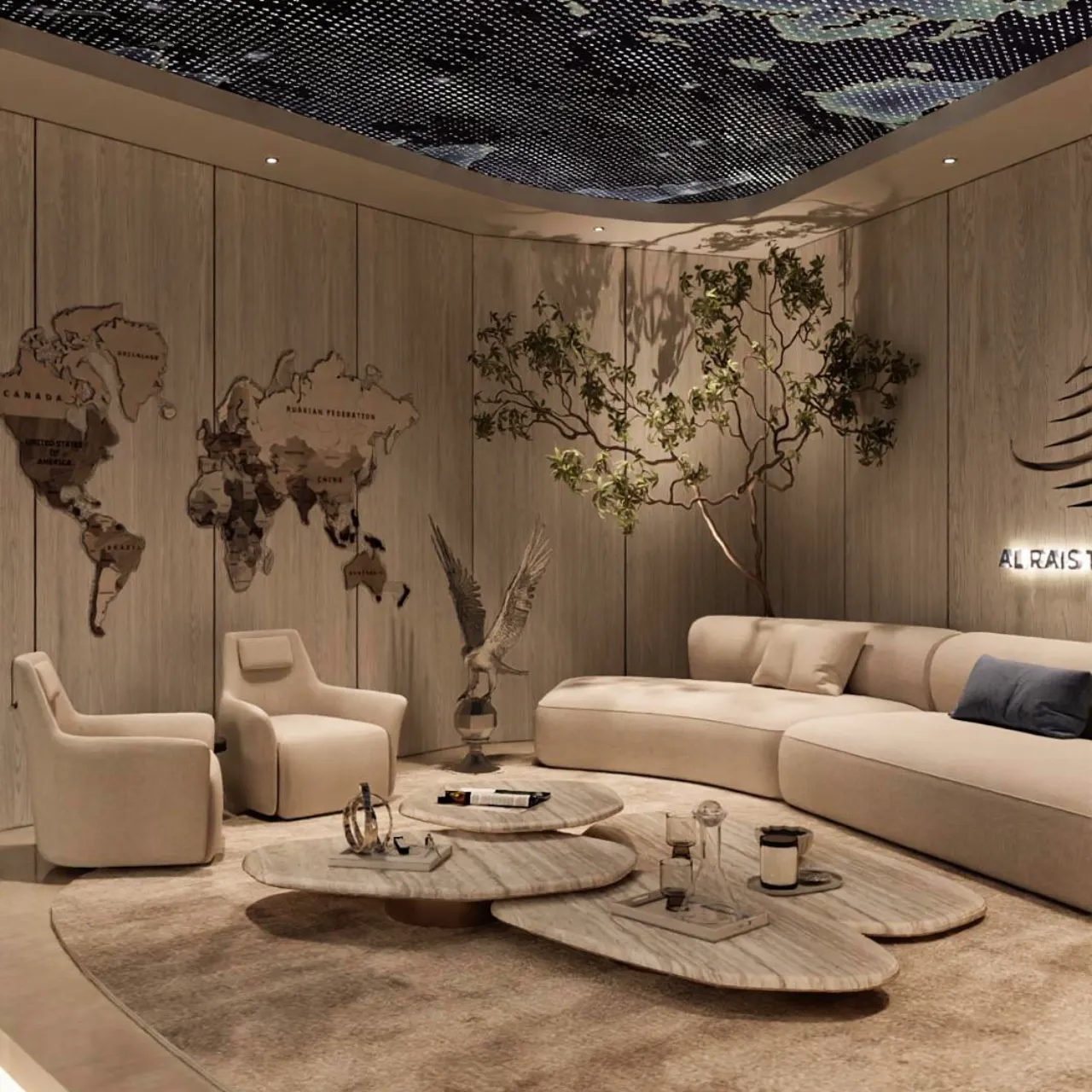
At the rear of the office, the space opens into a lounge area. This zone has a sectional sofa, lounge chairs, large coffee tables, a rug, a tree, and a branded wall. The lounge can be used as a waiting area, a VIP discussion area, or an informal meeting space. A slight level change and warm step lighting define this part of the office without using solid walls.
This planning solution allows the agency to serve several clients at the same time while still keeping the interior comfortable and visually organized.
A Ceiling Concept Inspired by Global Travel
One of the main visual features of the project is the ceiling. The ceiling design carries the travel identity of the space in a very direct but refined way.
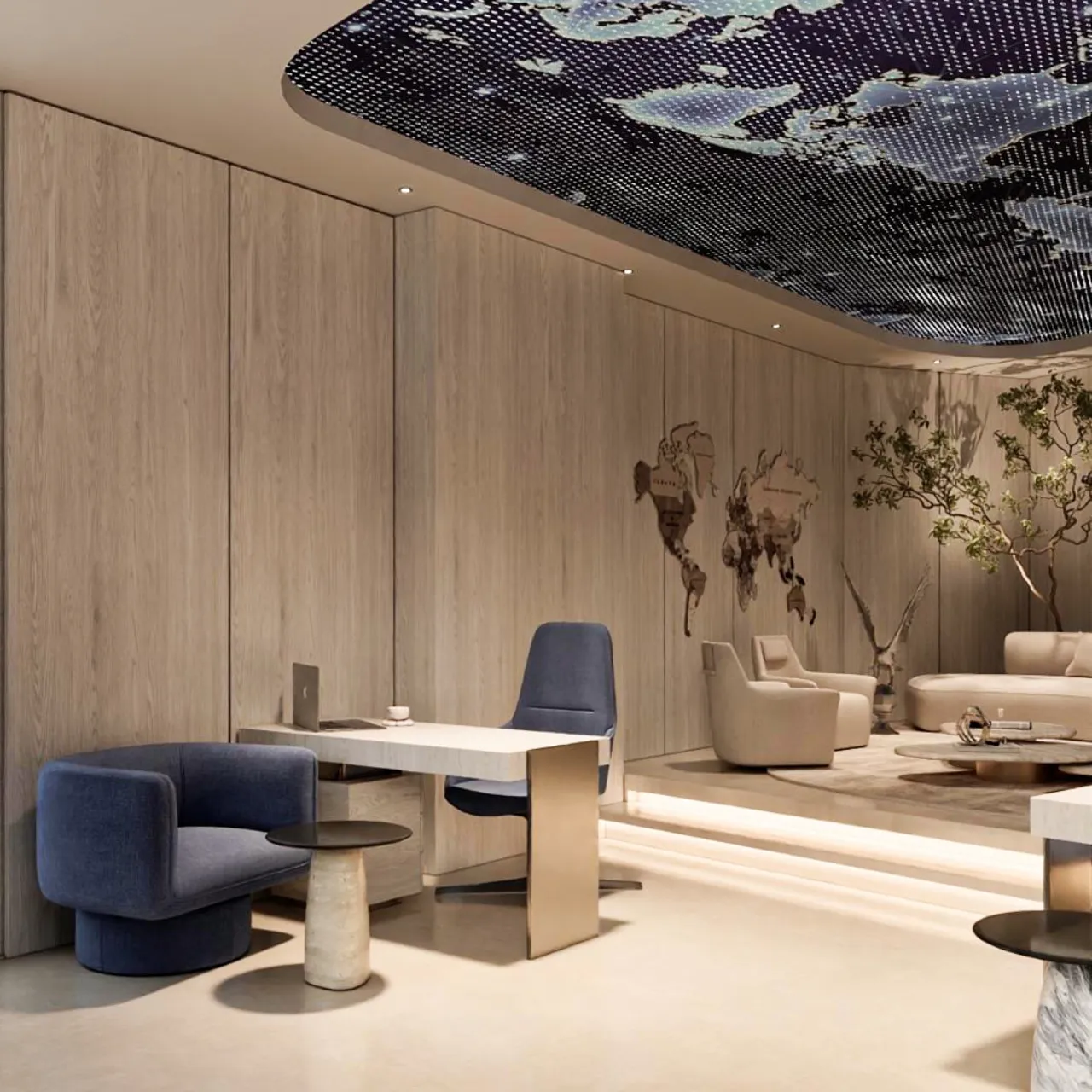
Large dark ceiling inserts feature a world map pattern with small illuminated dots. The effect suggests global routes, city lights, flight networks, night sky, and international movement. This is an effective idea for a travel agency because it immediately connects the interior with the company’s business.
The ceiling is not a flat decorative graphic. It is shaped with rounded corners and framed by a softer beige ceiling plane. This gives the map feature depth and prevents it from feeling too heavy. Recessed spotlights are placed around the ceiling, supporting daily office use while keeping the central map feature as the main visual focus.
The dark ceiling also creates contrast against the light wood walls and warm flooring. Without this contrast, the interior could feel too neutral. The ceiling gives the office a memorable identity and adds a sense of atmosphere to the long space.
Warm Wood Walls and a Luxury Interior Envelope
The walls are finished with light wood panels, creating a warm and continuous interior background. This wood treatment is one of the key elements of the design. It softens the office environment and makes the space feel welcoming rather than cold or corporate.
The vertical panel joints create rhythm along the walls and make the room feel taller. They also help conceal technical doors, storage, and wall divisions. This gives the interior a clean and complete appearance.
The pale oak tone works well for a Dubai office because it feels warm, natural, and bright. It pairs beautifully with beige flooring, champagne metal, grey marble, blue upholstery, and soft lighting. The result is a professional environment with a hospitality character.
The wall panels also create the right background for the company branding. The logo is mounted on the wood wall and illuminated from behind. This makes the logo part of the interior architecture rather than an added sign.
Branding Through Architecture
Branding in this project is handled through both direct and indirect design elements.
The direct branding appears in the illuminated company logo. The letters and graphic mark are placed on the wood wall with backlighting, creating a soft glow and a premium effect. This helps the company name remain visible without making the wall feel too commercial.
The indirect branding is even more important. The world map ceiling, wall map artwork, blue tones, global references, arched openings, and lounge-style client seating all support the travel agency identity. The space communicates international service and travel planning without relying on posters or oversized advertising graphics.
This kind of branding is effective because the company identity becomes part of the client experience. The design does not only show the brand name; it makes the whole office feel connected to the brand.
Furniture Selection and Custom Details
The furniture was selected and designed to support both comfort and function.
The consultation desks have a light wood finish and slim metal side supports. Their proportions feel lighter than standard office desks, which helps the space remain open. At the same time, each desk has enough surface area for practical work.
The blue high-back chairs create a clear visual accent. Blue is an appropriate color for a travel agency because it connects with sky, sea, aviation, and professionalism. It also adds depth to the beige and wood palette.
The visitor chairs are soft, rounded, and more lounge-like. This makes the client experience more relaxed. Clients may spend time reviewing destinations, ticket options, documents, or travel packages, so seating comfort matters.
The small round side tables add another hospitality layer. Their black tops create contrast, while the stone bases connect them with the marble and stone accents used elsewhere in the interior. These tables are small details, but they change how the client uses the space. They make each consultation point feel complete.
In the lounge area, the furniture becomes even softer. The sectional sofa, rounded armchairs, layered coffee tables, and large rug create a relaxed setting. This area can support longer discussions, waiting clients, family groups, or VIP visitors.
Color Palette: Warm Neutrals with Blue Accents
The color palette is based on warm neutrals, natural wood, blue upholstery, dark ceiling details, marble, and champagne metal.
The main background is soft beige and light oak. This gives the office a warm and bright foundation. The blue chairs provide contrast and connect the interior to travel-related associations such as sky and water. The dark ceiling map adds drama, while the black side tables and TV screen give definition.
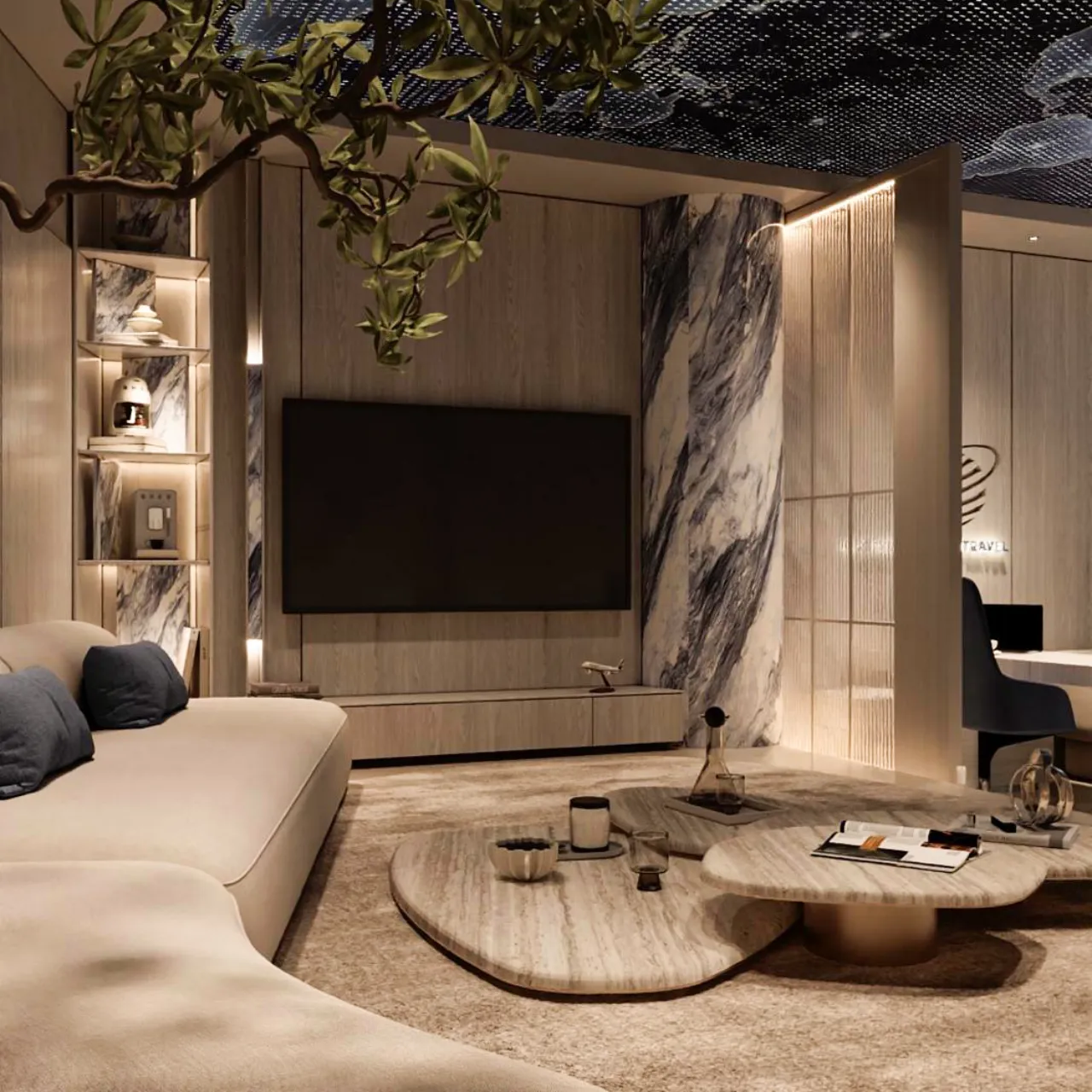
Grey and white marble accents add depth and movement. They appear around the TV wall, shelving, and partition areas. The marble veining brings a luxury detail into the space without overwhelming the design.
Champagne-toned metal is used on desk supports and details. It gives the office a polished quality while staying warmer than chrome or stainless steel. This metal tone works well with the beige and wood palette.
Greenery adds a final natural layer. The tree in the lounge area brings life, height, and organic shadow into the space. It softens the commercial character and makes the lounge feel more comfortable.
Lighting Design and Atmosphere
Lighting plays a major role in the project. The design uses several lighting layers rather than depending on general ceiling lights alone.
Recessed spotlights provide practical brightness for the work areas. They are positioned in small groups and pairs, giving the ceiling a clean rhythm. This supports the daily needs of the travel agency team.
Indirect lighting is used around ceiling details, step edges, shelves, partitions, and logo walls. This creates depth and gives the interior a warmer evening atmosphere. It also helps define zones without using heavy architectural divisions.
The backlit logo creates a clear brand moment. The light around the lettering makes the company name visible and gives the wood wall a premium effect.
The fluted glass partition is also enhanced with warm lighting. The ribbed texture catches the light and creates a soft glow. This makes the partition functional and decorative at the same time.
In the lounge area, the lighting becomes more atmospheric. The tree is lit in a way that creates shadows on the wall and ceiling. This adds movement and a natural feeling to the space, making the waiting area feel more relaxed and memorable.
Fluted Glass, Marble, and Partition Design
The interior uses partitions carefully. Instead of closing the space with full-height solid walls, the design introduces partial dividers with fluted glass, marble, and lighting.
The fluted glass provides visual privacy while still allowing light to pass through. This is important in a travel agency office where clients may want some separation during discussions, but the space still needs to feel open and connected.
The vertical ribbed texture of the glass works well with the vertical wood panels. It also adds a luxury texture that catches light beautifully.
Marble inserts beside the fluted glass add a premium layer. The grey veining contrasts with the pale wood and adds visual richness. Together, glass, marble, and warm lighting create a feature partition that helps organize the office while adding character.
Lounge Area for Waiting and VIP Consultation
The rear lounge is one of the most valuable parts of the layout. It gives the travel agency a comfortable place for clients who need to wait, discuss longer travel plans, or sit in a less formal setting.
The lounge includes a curved beige sectional sofa, soft armchairs, layered coffee tables, a rug, wall map artwork, and a tree. This creates a setting that feels closer to a boutique hotel lounge than a standard office waiting area.
The raised platform and illuminated step separate this area from the main consultation zone. This subtle change gives the lounge its own identity without isolating it from the rest of the office.
The wall map behind the seating strengthens the travel theme at eye level. Combined with the ceiling map, it creates a full spatial identity for the company. The client is surrounded by references to global destinations, but the overall feeling remains refined and comfortable.
This lounge also gives the company more flexibility. It can be used for waiting clients, family groups, premium package discussions, informal meetings, or presentation moments.
TV Wall and Presentation Area
The TV wall adds practical value to the agency. It can be used to show destination videos, travel packages, hotel options, promotions, or company content.
The TV is integrated into a wood and marble wall composition. Open shelves with warm lighting hold decorative objects, while a low cabinet provides storage and anchors the screen visually. The marble slabs on the sides bring movement and contrast to the wall.
This area prevents the lounge from being only decorative. It adds a real business function and gives the company another way to communicate with clients visually.
Arched Openings and Connection to the Outside
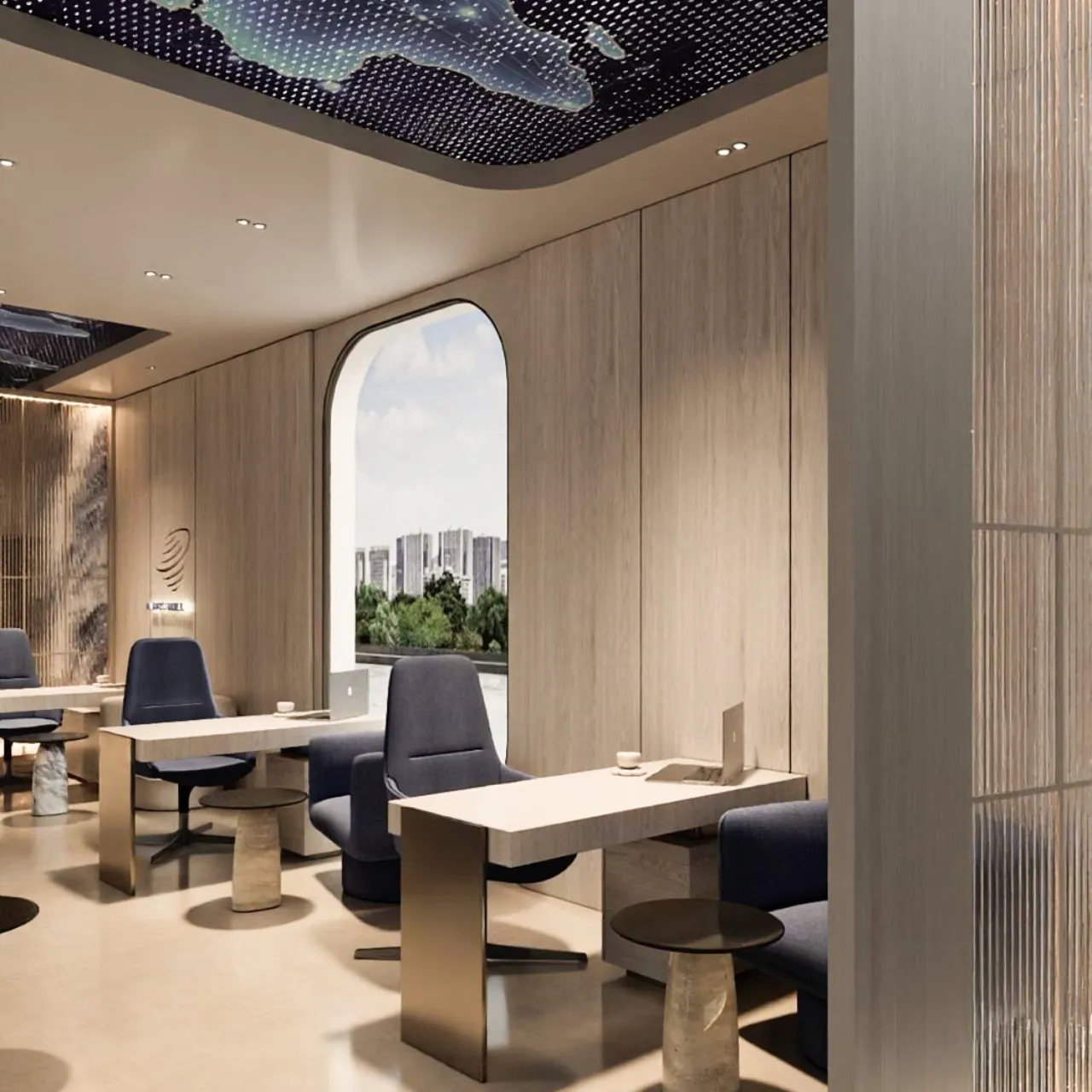
The arched windows are another important architectural feature. They bring daylight into the office and visually connect the interior with the city outside.
The arch shape softens the long room and connects with the rounded ceiling inserts, curved chairs, round tables, and lounge furniture. This repeated curved language helps the whole interior feel unified.
The dark trim around the arched openings gives them definition. Through the windows, clients can see greenery and city buildings, which adds depth to the interior. For a travel agency, this outward view feels especially suitable because the business itself is connected with movement, destinations, and places beyond the office.
A Balance Between Work Efficiency and Client Comfort
This office interior design works because it balances the needs of the company team with the comfort of the client.
For staff, the layout provides clear desks, practical seating, laptop space, storage, task lighting, and easy circulation. Each advisor has a defined work point and can meet clients comfortably.
For clients, the experience is much warmer than a standard office visit. They are seated in upholstered chairs, offered side tables, surrounded by warm materials, and supported by a relaxed atmosphere. The lounge gives them another place to wait or speak in a softer setting.
The design also communicates professionalism. The branding is integrated, the finishes are refined, and the space feels organized. Clients can immediately understand that the company values presentation, comfort, and service quality.
Material Palette and Finish Strategy
The material palette combines light wood, warm flooring, marble, fluted glass, upholstery, metal, and soft decorative elements.
Light wood panels create the main architectural envelope. Marble adds contrast and premium detail. Fluted glass brings texture and privacy. Champagne metal gives the desks a polished finish. Upholstery softens the office and supports longer client meetings. The rug in the lounge adds warmth and improves acoustic comfort.
The finishes are not selected randomly. Each material has a role. Wood creates warmth. Marble gives depth. Glass divides without closing the room. Upholstery improves comfort. Metal adds refinement. Lighting connects all the surfaces together.
This layered approach makes the interior feel complete and carefully considered.
How the Design Supports the Business
For a travel agency, the interior is part of the service experience. Clients are not only buying tickets or travel arrangements. They are trusting the company with plans, schedules, family needs, budgets, and important details.
This design supports that trust by creating a professional and welcoming environment. The layout makes consultation easy. The lounge supports longer visits. The branding reinforces the company identity. The ceiling map makes the office memorable. The materials create a premium feeling. The lighting makes the space comfortable throughout the day.
The interior also helps the company stand apart in a competitive Dubai market. Many travel offices can offer similar services, but the physical space can influence how clients feel about the company. A well-designed office can make the business appear more established, more reliable, and more service-oriented.
Conclusion
This Dubai travel agency interior design project shows how a commercial office can be transformed into a branded client lounge. The design combines consultation desks, comfortable seating, a rear lounge, a TV presentation wall, integrated branding, warm wood panels, marble accents, fluted glass partitions, and a dramatic world-map ceiling.
The result is a space that supports daily business operations while also creating a memorable client experience. It feels professional, warm, and connected to the idea of global travel. Every main design decision supports the agency’s identity: from the map ceiling and blue upholstery to the lounge seating, arched openings, backlit logo, and hospitality-style lighting.
For a travel agency in Dubai, this type of interior design does more than improve appearance. It shapes how clients feel when they enter, how comfortably they discuss their plans, and how clearly they remember the company after they leave.