Formal Dining Room Design: A Luxury Renovation with Stone, Mirror, and Warm Lighting
A formal dining room has to do several things at once. It needs to feel impressive at first glance, comfortable during a long meal, practical for service, and cohesive from every angle. Here you can see a formal room renovation we completed for one of our clients as part of our villa interior design and renovation services. This renovated dining room achieves that balance through using stone, mirror, wood, upholstery, warm lighting, and architectural framing.
The result is a dining space with a strong sense of occasion. It feels prepared for hosting, celebration, and formal family gatherings. Every major design decision supports that purpose, from the oversized dining table to the sculptural ceiling lights, from the mirrored wall to the service cabinetry, and from the soft dining chairs to the finished wash area at the end of the room.
This is not a room built around one decorative object. It works because each element supports the next.
The room begins with scale
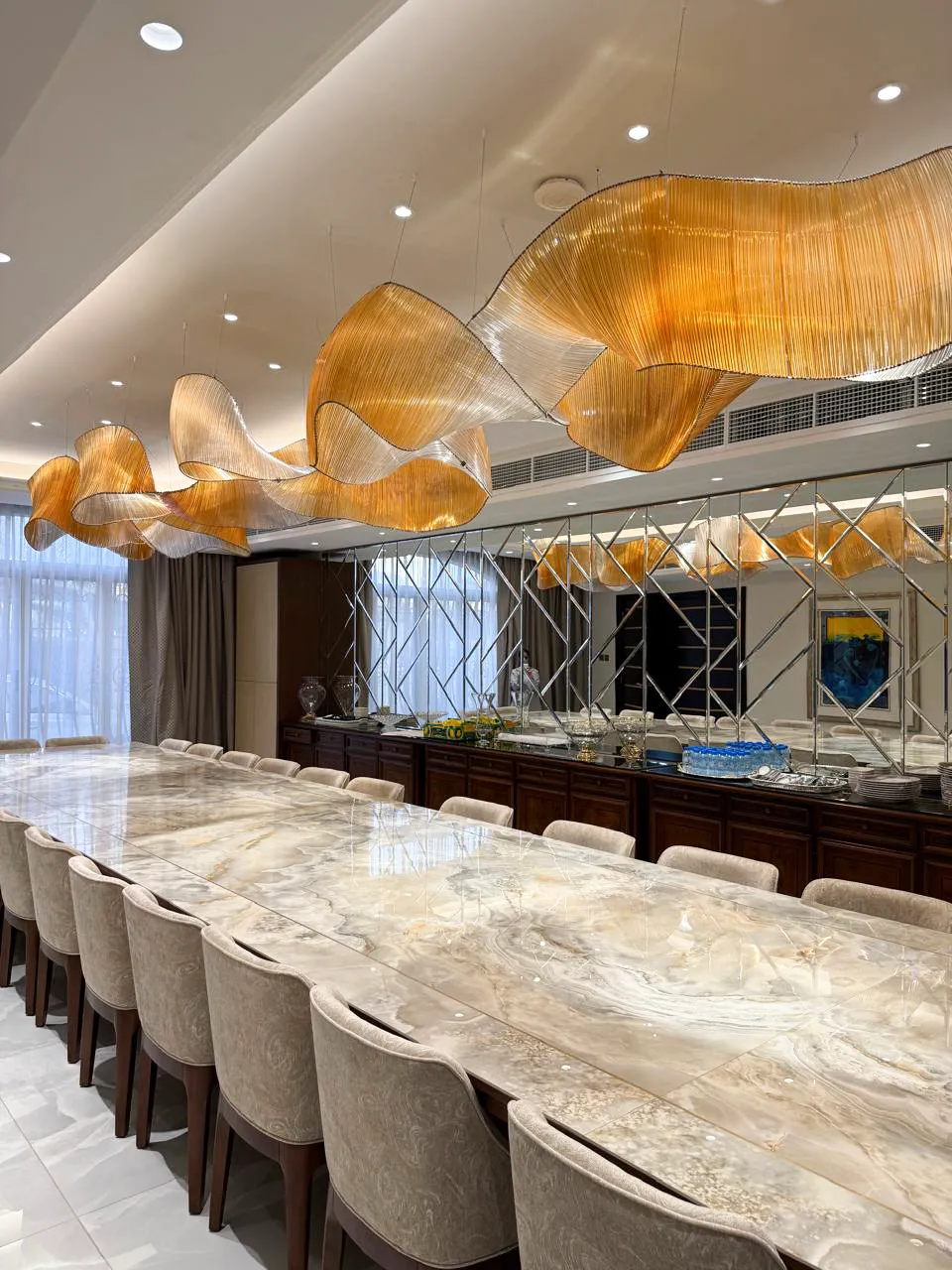
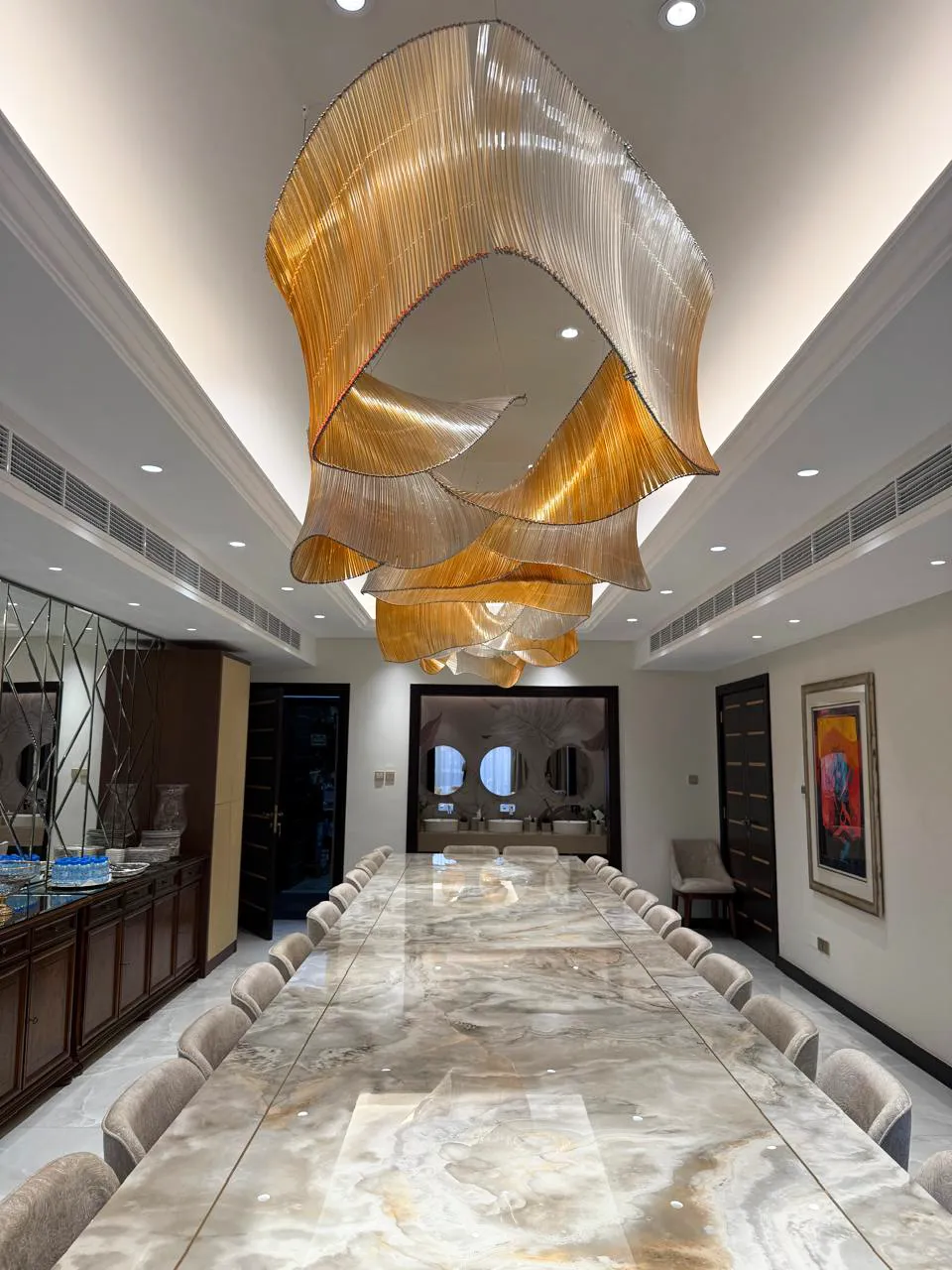
The first thing that defines the space is scale. The dining table is long, generous, and visually substantial. It immediately tells the viewer that this room is meant for gathering. Rather than feeling like a casual dining corner, the room has the presence of a private banquet space.
The table sets the main axis of the interior. Its length organizes the room and gives the eye a clear direction. The ceiling lights follow that same direction. The chairs repeat along both sides. The sideboard stretches along the wall. Even the framed wash area at the far end becomes part of this long composition.
This is why the room feels ordered. Large spaces can easily feel empty or disconnected if the furniture does not match the architecture. Here, the table has enough visual weight to hold the center of the room. It does not disappear under the ceiling feature, and it does not fight with it either. The table and lighting share the same level of importance.
That relationship is a major reason the dining room design feels complete after renovation.
The stone table gives the space its luxury foundation
The polished stone dining table is the visual foundation of the room. Its surface has cloudy movement, soft grey veining, beige undertones, and subtle warm mineral details. The pattern feels natural and fluid, which helps soften the formality of such a large table.
The glossy finish is essential. It reflects ceiling lights, pendant forms, recessed downlights, and surrounding surfaces. This reflection adds brightness and creates a sense of richness without needing heavy decoration on the tabletop.
A table of this size could have felt severe if it were plain white, black, or overly patterned. Instead, this stone has movement but remains soft in color. That makes it luxurious without becoming visually loud. It brings drama through material rather than through ornament.
The stone also connects to other parts of the renovation. Similar pale mineral tones appear in the floor and wash areas, giving the room a shared material language. This repetition makes the dining area feel planned as one whole interior rather than assembled from separate pieces.
Reflection makes the room feel larger and brighter
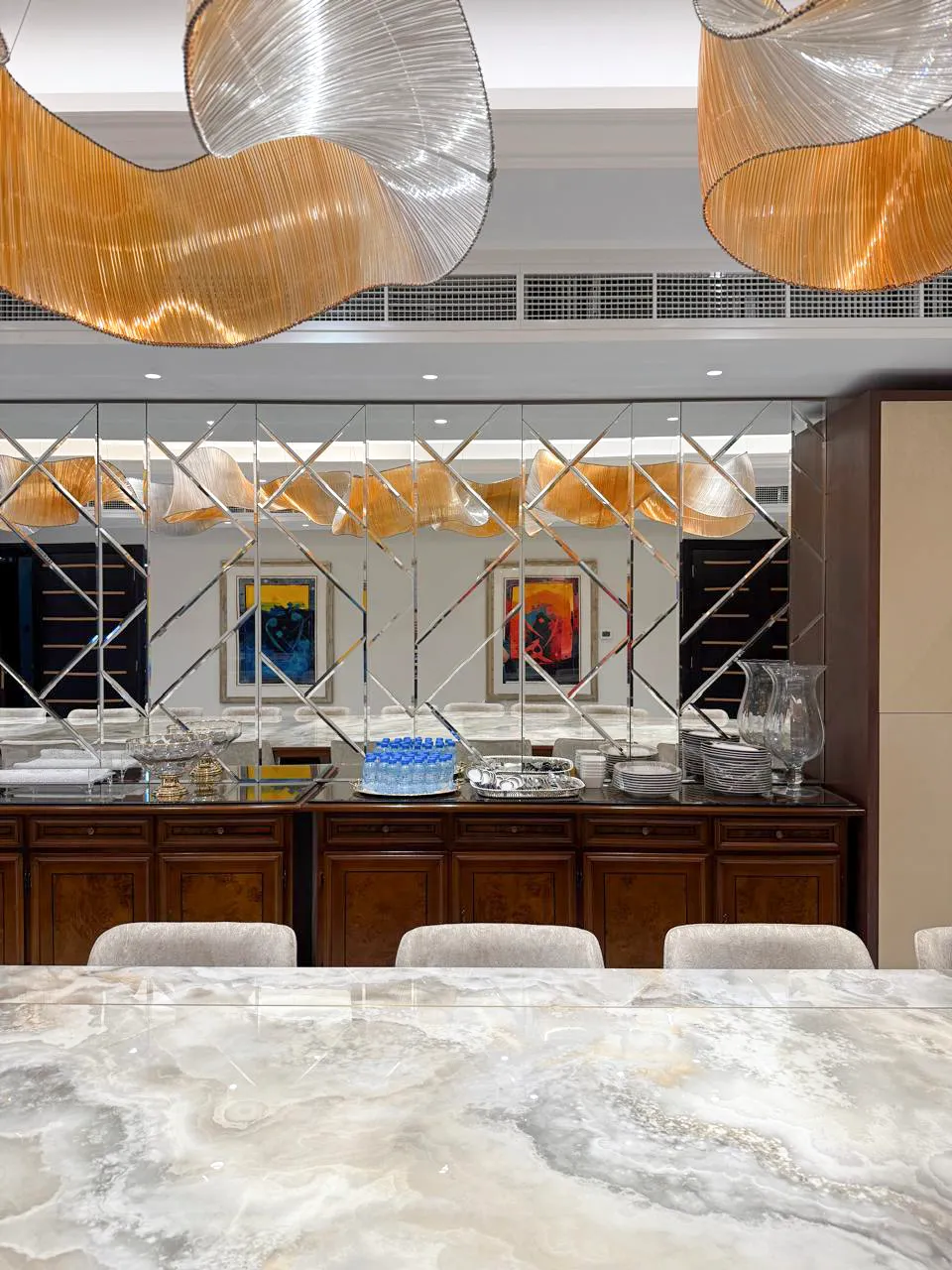
The mirrored wall is one of the most important design tools in the room. It expands the perceived width, reflects the ceiling feature, and doubles the visual impact of the dining table. In a long room, this is especially useful because a mirror wall can prevent the space from feeling narrow.
The mirror is divided by diagonal metal strips, creating a geometric pattern. This keeps the large reflective surface from feeling flat. The metal lines add structure, shine, and a formal decorative rhythm.
The mirror also strengthens the glamour of the space. It catches the amber light, reflects the table surface, and repeats the sculptural ceiling forms. This creates a layered visual experience, where the room feels deeper and brighter than its physical footprint.
The mirror works particularly well above the sideboard. That wall becomes both a service area and a decorative backdrop. Plates, trays, glass vessels, and water bottles appear more polished because they sit in front of a reflective architectural surface.
Dark wood brings depth and tradition
The dark wood cabinetry is what gives the room depth. Without it, the dining room would be almost entirely pale and reflective. The wood adds gravity, warmth, and a formal furniture quality.
The cabinetry has paneled fronts and traditional detailing, which introduces a classic note into an otherwise contemporary setting. This combination is important. The ceiling lights and mirror wall feel modern, while the wood sideboard adds a sense of heritage and permanence.
The sideboard also has a practical role. It supports dining service, storage, plate arrangement, drink service, and event preparation. A formal dining room needs this kind of functional support. The presence of the sideboard makes the space feel usable, not only decorative.
The dark tone also links to other details in the room: door frames, mirror outlines, and the framed wash area. These darker elements create contrast and prevent the pale palette from becoming flat.
Upholstered chairs soften the harder finishes
The dining chairs play a quieter but very important role. The room contains many hard and glossy surfaces, so the chairs add softness. Their light beige upholstery introduces comfort, texture, and a human scale.
The rounded chair backs contrast with the rectangular table, paneled cabinetry, linear grilles, and geometric mirror wall. This soft curve makes the dining setting more welcoming.
The upholstery color is well chosen. It sits close to the tones of the stone table and floor, so the chairs feel integrated. At the same time, the darker wooden legs connect to the sideboard and doors. This creates a bridge between the pale and dark parts of the scheme.
The repeated chairs also create a formal rhythm. Their consistency supports the grand dining layout without adding unnecessary visual noise.
The color palette keeps the luxury feeling balanced
The design uses a refined neutral palette: ivory, cream, beige, taupe, grey, warm brown, black, and amber. This palette lets texture and material take the lead.
The pale stone and walls create brightness. The grey and beige veining adds depth. The dark wood introduces contrast. The amber lighting provides warmth. Black trim gives definition. Small pieces of colorful artwork add personality without taking over the room.
This color strategy is important because the room already has many reflective surfaces and a dramatic ceiling installation. A louder wall color or bold upholstery would have made the interior feel too busy. Instead, the neutral palette allows the architecture, lighting, and materials to carry the design.
The amber lighting is the main accent. It gives the entire space a golden tone, making the dining room feel festive and refined.
The wash area extends the design experience
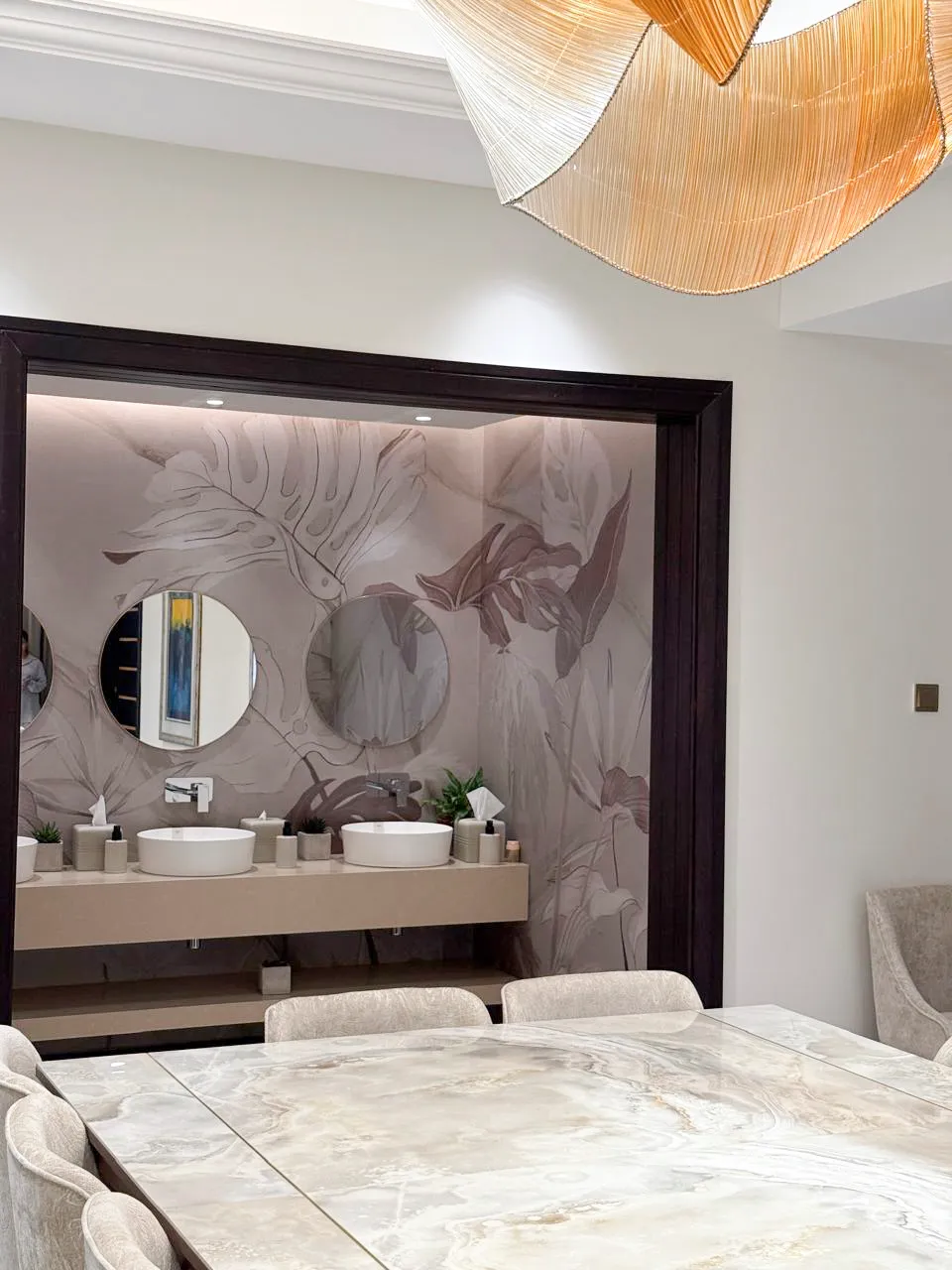
The wash area at the end of the dining room is treated as part of the interior rather than as a secondary utility space.
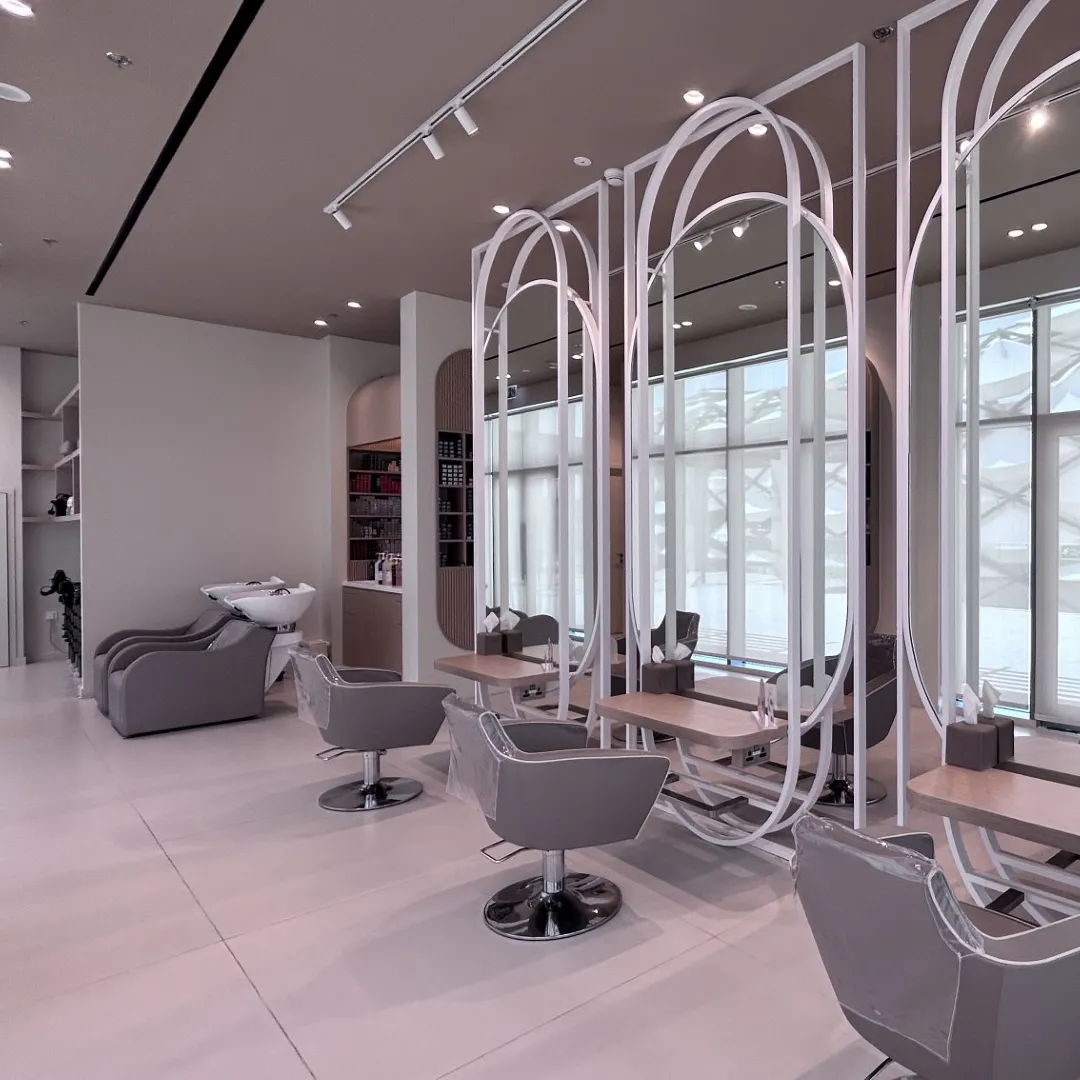
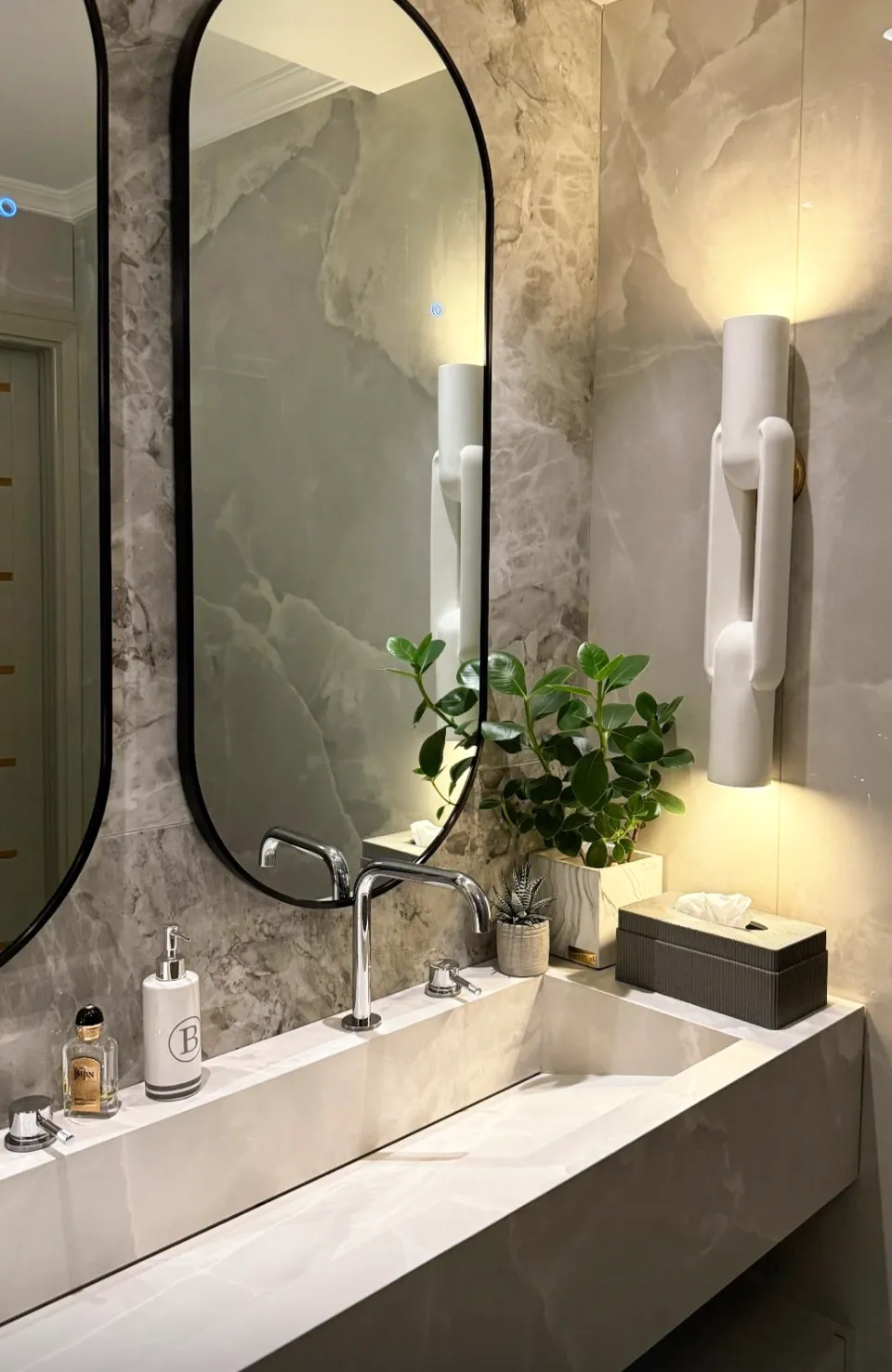
The wash area uses dramatic stone walls, tall rounded mirrors with black frames, a long integrated basin, chrome fittings, sculptural white sconces, and small plants. This version feels architectural and polished. The arched mirrors add height, while the wall lights bring a gallery-like quality.
Also, the wash area has a softer botanical wall treatment, round mirrors, twin vessel basins, and a dark frame around the opening. This version feels warmer and more decorative, with a boutique hospitality character.
This approach works because it treats the wash area as a visual destination. At the end of the long table, the eye needs something finished and attractive. The framed wash area provides that endpoint.
It also supports the hosting function of the room. Guests have convenient access to a beautifully finished wash zone, which makes the dining area feel more complete and service-ready.
The lighting scheme adds depth at several levels
The lighting design is layered. The sculptural pendants provide drama and warmth. Recessed downlights add practical brightness. Cove lighting softens the ceiling edges. Wall sconces in the wash area create accent lighting. Reflections from the table, mirror, and floor multiply the effect.
This layered lighting is essential in a formal dining space. A room like this cannot rely on one light source. It needs general lighting for service, warm feature lighting for atmosphere, and accent lighting for decorative surfaces.
The ceiling cove makes the room feel taller and more finished. The recessed lights keep the dining table bright. The amber fixtures create the main emotional effect. Together, these layers allow the room to feel polished in daylight and atmospheric in the evening.
Why the renovation feels cohesive
The renovation feels cohesive because the same visual ideas repeat in different forms.
- Curves appear in the ceiling lights, chair backs, mirrors, basins, and wall sconces.
- Reflective surfaces appear in the table, mirror wall, floor, glassware, and chrome fittings.
- Warm tones appear in the amber lighting, wood cabinetry, beige chairs, and stone veining.
- Dark outlines appear in the doors, mirror frames, lighting edges, and wash area framing.
- Stone-like surfaces appear in the table, flooring, wall panels, and wash basins.
These repeated ideas make the design feel unified. Nothing feels accidental. Each material and shape seems to belong to the same family, even though the room includes many different elements.
The room’s elegance comes from proportion and material coordination rather than excessive decoration. The table is large because the room can support it. The ceiling installation is dramatic because the table requires a feature of similar scale. The mirror wall is expansive because the side elevation needs brightness and depth. The sideboard is substantial because a dining room of this size needs storage and service capacity.
This is why the room does not depend on small accessories to feel complete. The architecture and main furnishings do most of the work.
The decorative objects on the sideboard are secondary. They support the hosting function, but the main impression comes from the larger design decisions: stone, lighting, mirror, cabinetry, and layout.