Abu Dhabi Beauty Salon Interior Design: A Boutique Case Study
A beauty salon is a place where design has to support both comfort and precision. Clients should feel relaxed, welcomed, and confident, while the salon team needs a practical environment for daily services, product display, movement, storage, and client care. For this Abu Dhabi beauty salon in Al Qana, the interior design was developed as a boutique commercial space where every zone has its own role, mood, and visual identity.
The project combines hair styling stations, manicure tables, a treatment area, a waiting lounge, and product display into one coordinated salon interior. Instead of using a plain clinical approach, the design brings together floral wall art, sculptural mirrors, pastel joinery, warm lighting, colourful seating, and a graphic ceiling system. The result is a beauty salon interior that feels professional, memorable, and closely connected to the emotional side of beauty services.
A Beauty Salon Interior Designed Around Client Experience
The main design idea was to create a salon that feels inviting from the first moment, but still works efficiently for the staff. Beauty salons depend on atmosphere as much as service quality. The client does not only come for a procedure; they spend time waiting, looking in mirrors, moving between zones, viewing products, and forming an impression of the brand.
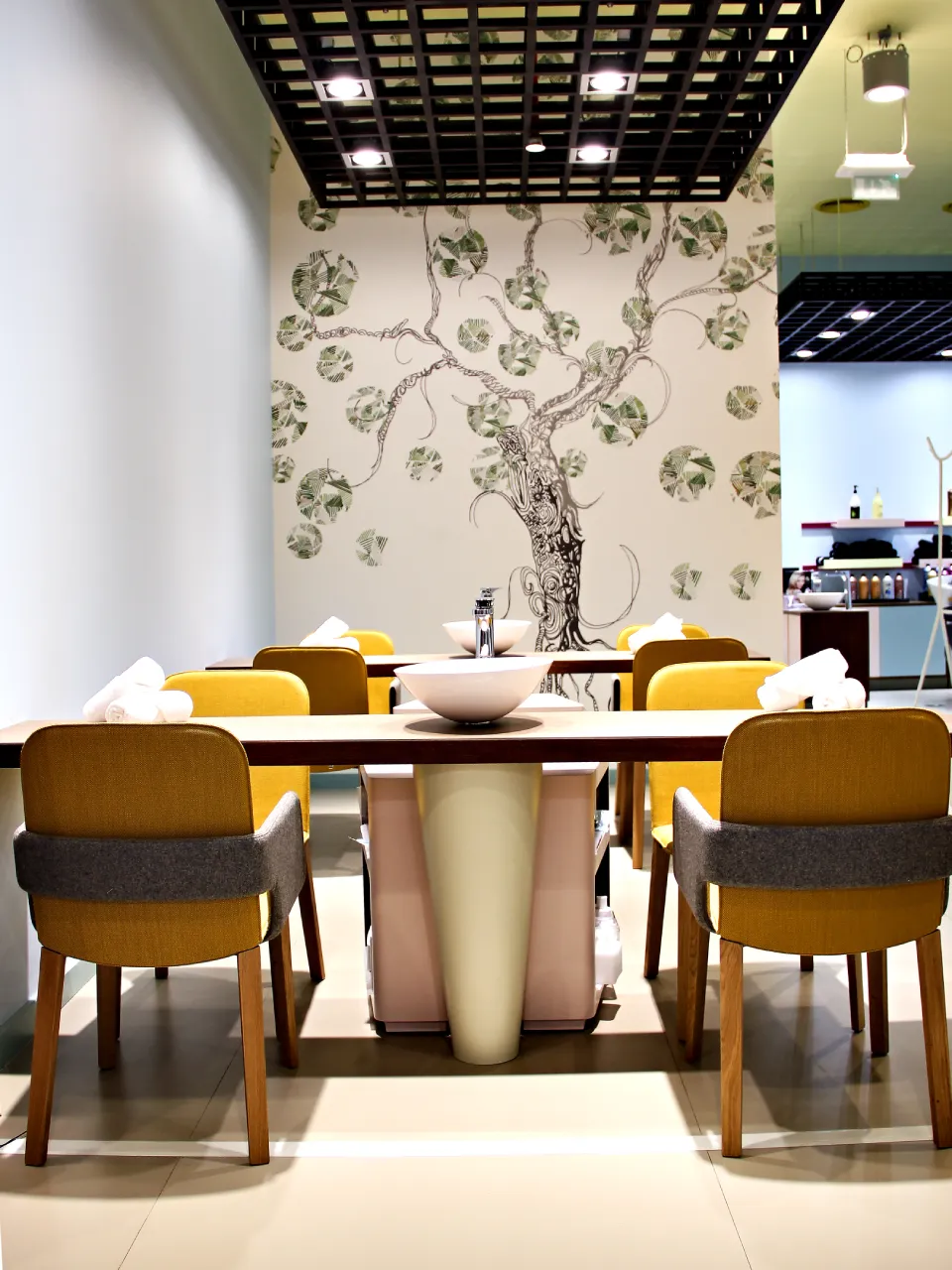
For this reason, the design gives each area a specific character. The waiting lounge uses a bold red sofa and round mirror to create an immediate visual statement. The hair styling zone feels lighter and more open, with large windows, grey salon chairs, and sculptural white mirror frames. The treatment area becomes softer and more intimate with a floral mural and hidden LED lighting. The manicure zone has a more graphic look, with a black ceiling grid, yellow chairs, and a decorative tree wall.
This zoning helps the salon feel organised without making every area look the same. Clients can easily understand where different services take place, while the full interior still feels connected through repeated curves, botanical graphics, pale surfaces, and carefully placed lighting.
A Boutique Concept with Floral Graphics and Sculptural Forms
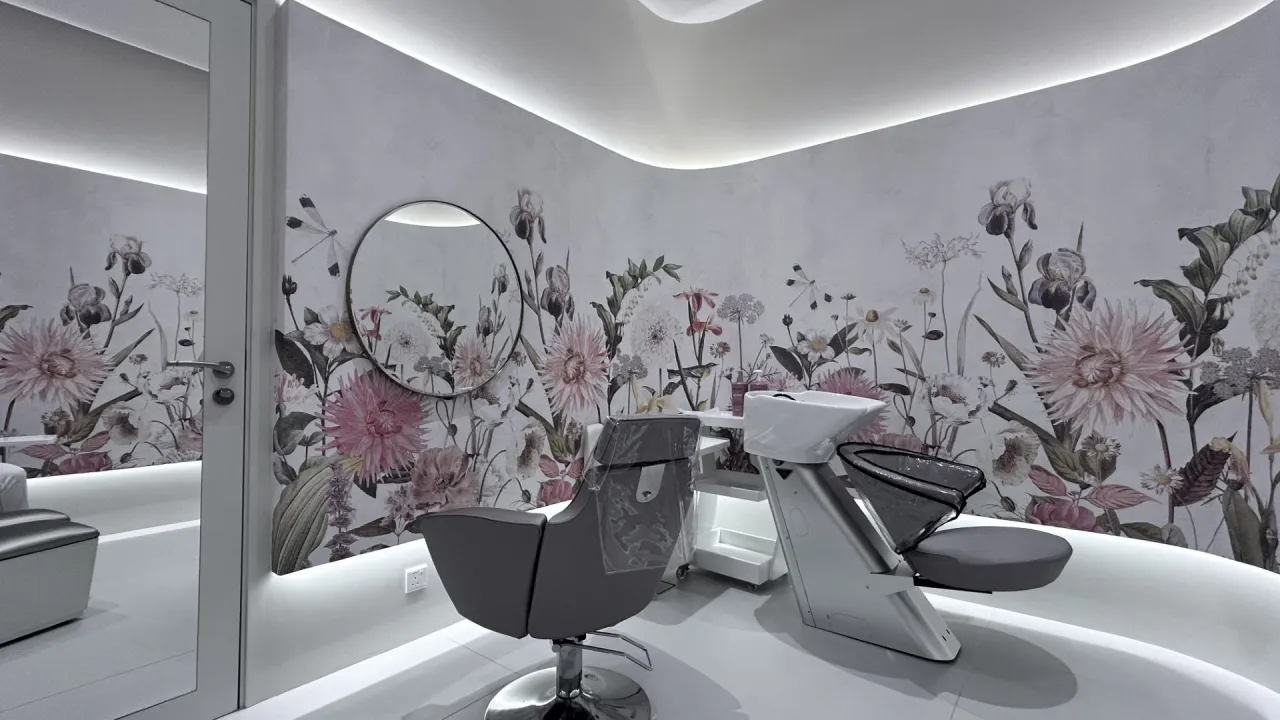
The salon interior uses botanical graphics as one of its main visual themes. Flowers, branches, leaves, and illustrated tree forms appear in different areas, but each wall treatment has its own style. In the manicure area, the feature wall shows a large illustrated tree with circular green leaf details. In the treatment room, large floral artwork wraps the walls and creates a softer background for the shampoo and care area. In the lounge, delicate branch graphics connect visually with the red sofa and the round mirror.
These wall designs help the salon avoid a standard commercial look. They bring softness, personality, and a feminine atmosphere into spaces that also contain technical salon furniture and equipment. The floral elements make the interior feel warmer and more personal, while the clean furniture lines and structured lighting keep the space suitable for professional beauty services.
Curved shapes also play an important role. The round red mirror in the waiting area, the circular mirror in the treatment room, and the large oval frames around the hair styling stations create a softer geometry. These curves balance the straight lines of the floor tiles, counters, cabinetry, and black ceiling grid.
Hair Styling Area with Signature Mirror Stations
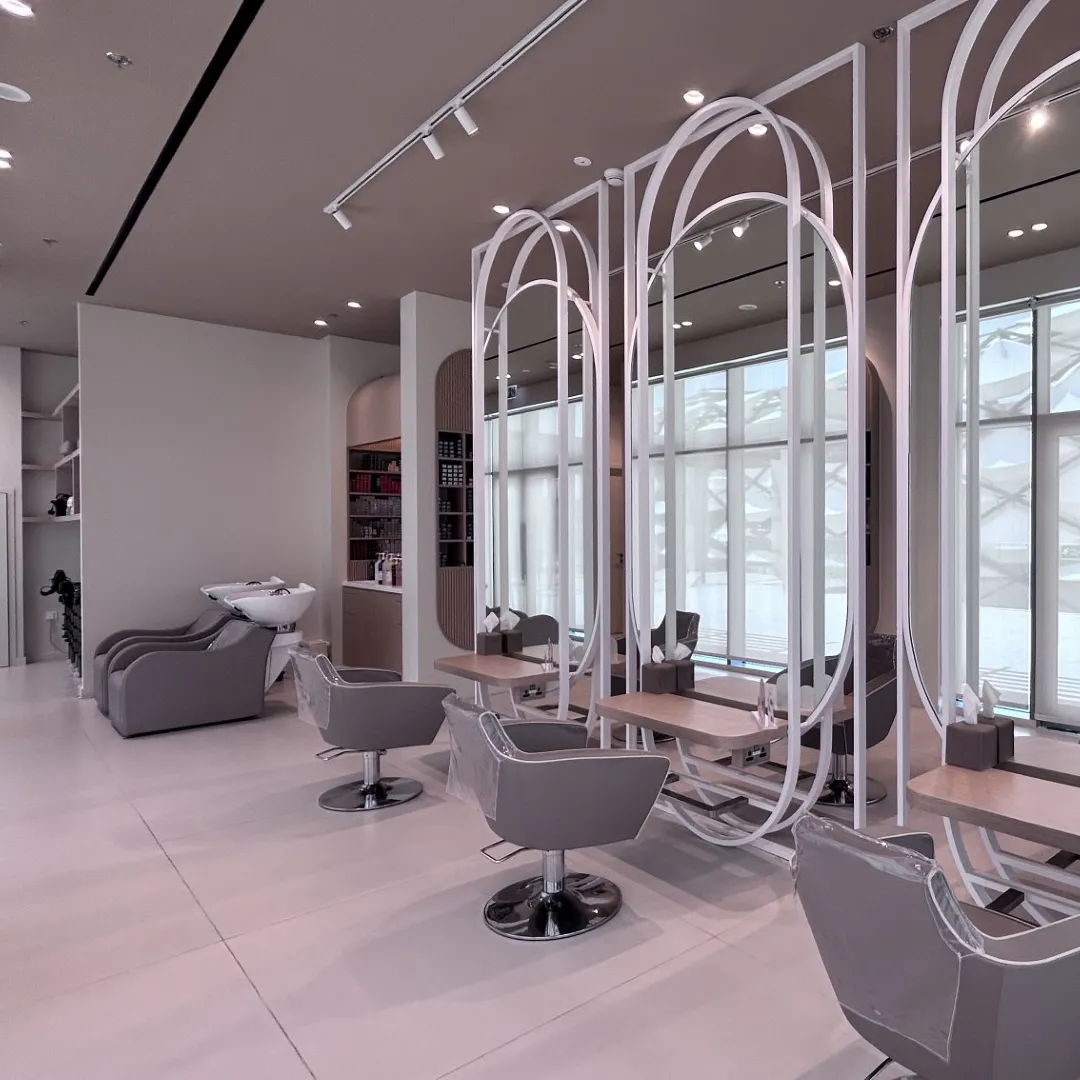
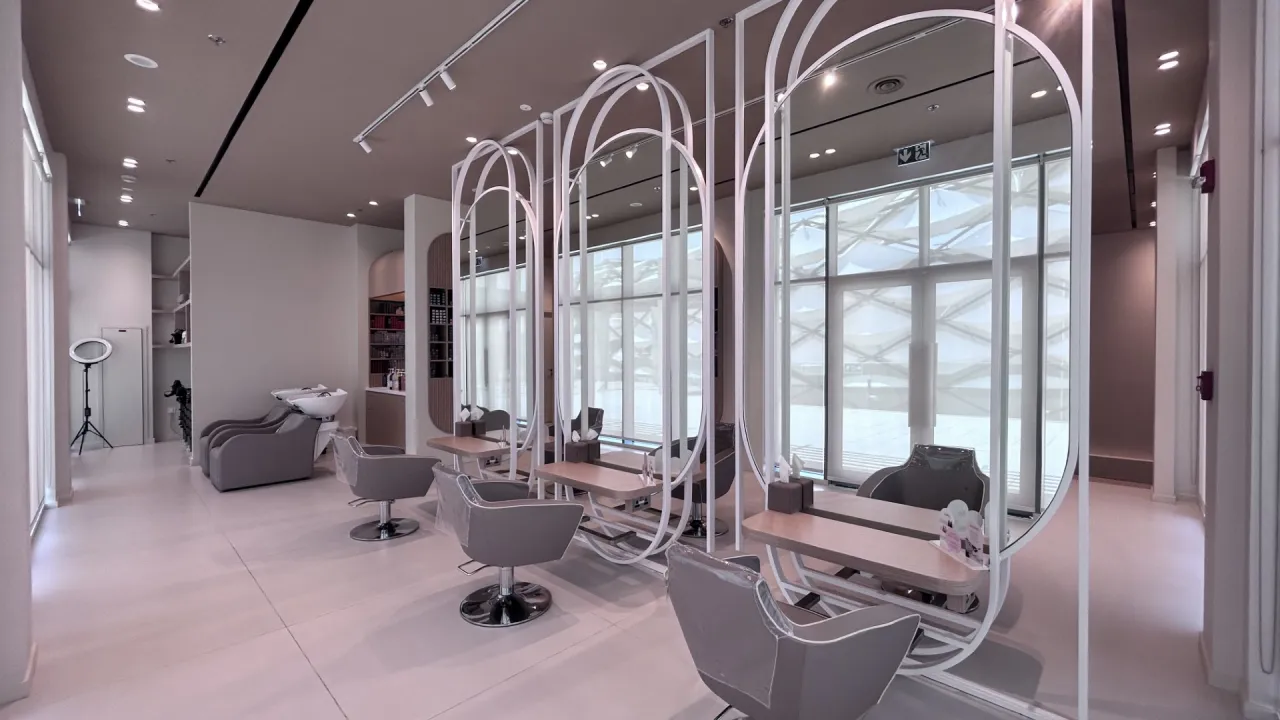
The hair styling zone is one of the key areas of the salon. Large white oval mirror frames define each styling station and give the space a clear boutique identity. Instead of using simple wall-mounted mirrors, the design turns each station into a sculptural feature. The repeated oval frames create rhythm along the wall and make every client chair feel like a personal styling area.
The grey styling chairs, chrome bases, and pale timber worktops give the area a practical and professional look. The colour palette is soft enough to keep the space comfortable, while still being neutral for hair services, colour work, and client consultations.
Lighting is also planned for function. Track lights and ceiling spotlights help provide clear visibility for stylists, while large windows bring natural daylight into the space. This is especially useful in a hair salon, where colour perception and client comfort are important. The mirrors also reflect light and make the area feel wider and brighter.
The styling area shows how beauty salon interior design can combine service needs with a recognisable visual feature. The layout allows the team to work comfortably, while the client receives a more special salon experience.
Treatment Room with Soft Lighting and Floral Walls
The treatment and washing area has a softer atmosphere than the main styling zone. This is important because shampooing and certain treatments require a more relaxed setting. In this area, the floral mural fills the walls with large flowers, muted pink tones, soft greens, and delicate botanical details.
The ceiling has a curved recessed form with concealed LED lighting. This lighting creates a gentle glow around the ceiling edge and helps the room feel smoother and more relaxing. Additional low-level lighting near the wall base highlights the floral mural and adds depth to the room.
The white shampoo basin, grey salon chair, pale flooring, and round mirror keep the space clean and functional. At the same time, the wall design and lighting prevent the area from feeling like a back service room. It becomes part of the full client experience.
This approach is important in salon planning. Even practical treatment areas should feel considered, because clients spend time there and often associate the comfort of this zone with the quality of the service.
Manicure Area with a Graphic Ceiling and Warm Seating
The manicure area uses a more structured and energetic design language. The black open-grid ceiling creates a defined visual frame above the service tables. Spotlights are integrated into the grid, giving direct light to the manicure stations and helping staff work with precision.
Below the ceiling, yellow upholstered chairs add warmth and personality. Their wooden legs soften the technical feel of the service tables, while grey back details connect them to the wider salon palette. The combination of yellow chairs, pale flooring, dark ceiling, and botanical wall art gives the nail-care zone a clear identity.
The service tables are arranged for practical use, with seating on both sides, prepared towels, bowls, and enough surface area for manicure work. The design supports multiple clients at the same time while keeping the area visually ordered.
This zone shows how commercial salon interiors can be both practical and expressive. The layout supports daily work, while the ceiling and feature wall create a recognisable setting for the service.
Waiting Lounge with Red Accent and Retail Visibility
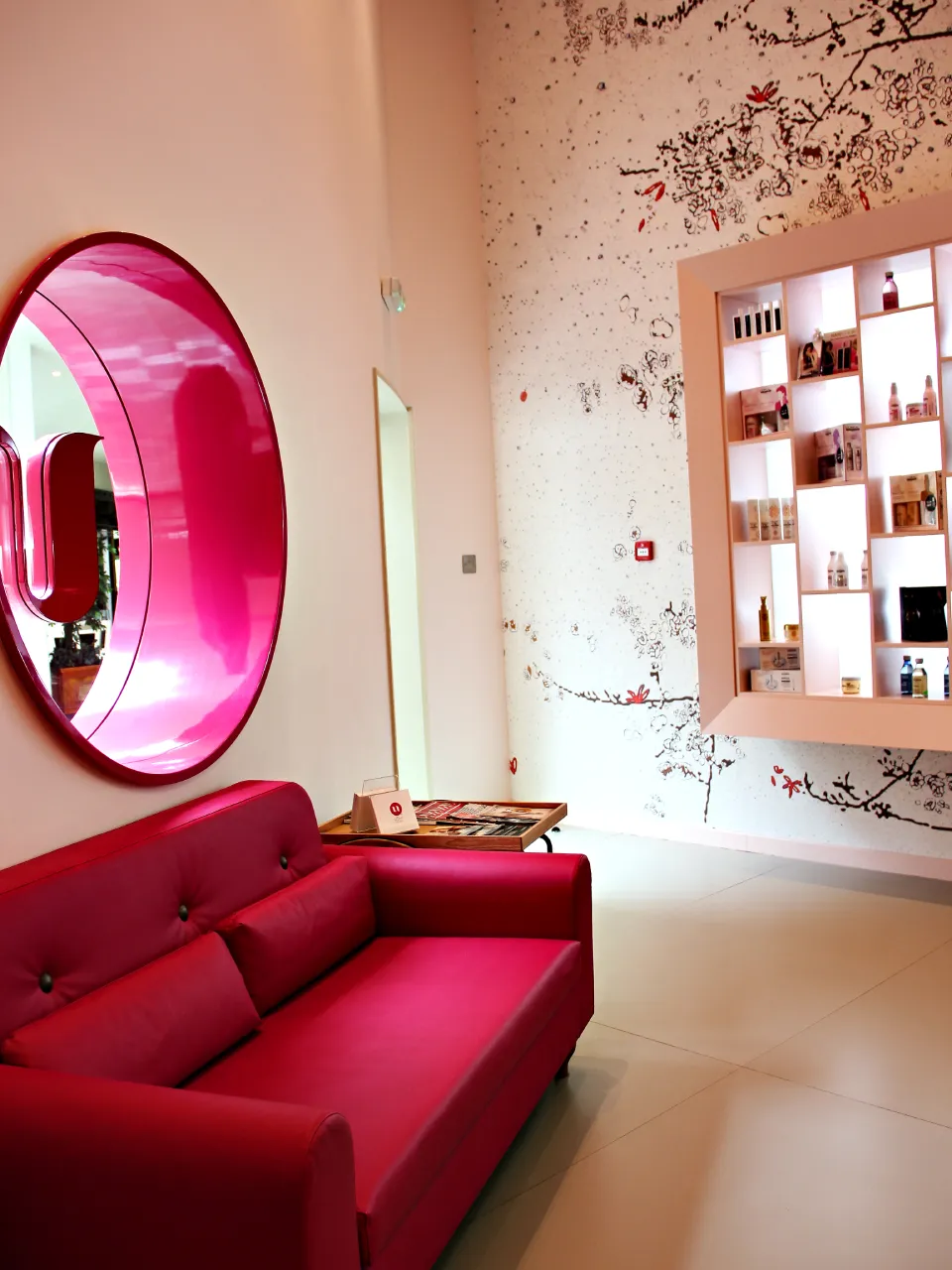
The waiting area is designed to make an immediate impression. A red sofa and large circular red mirror bring colour, energy, and a beauty-related sense of glamour into the space. The glossy mirror frame and saturated upholstery connect well with the world of cosmetics, colour, and personal styling.
The lounge also has a practical role. A small tray table with magazines supports waiting clients, while the nearby product display wall keeps retail items visible. This is an important planning choice for a beauty salon. Product display should not feel separate from the client experience; it should be naturally placed where clients can see it while waiting or after a service.
The high wall behind the lounge is treated with branch-style graphics, which help fill the vertical space and connect the waiting area to the salon’s wider botanical theme. This creates a clear visual background that can also work well for social media photos and brand content.
Product Display and Storage as Part of the Design
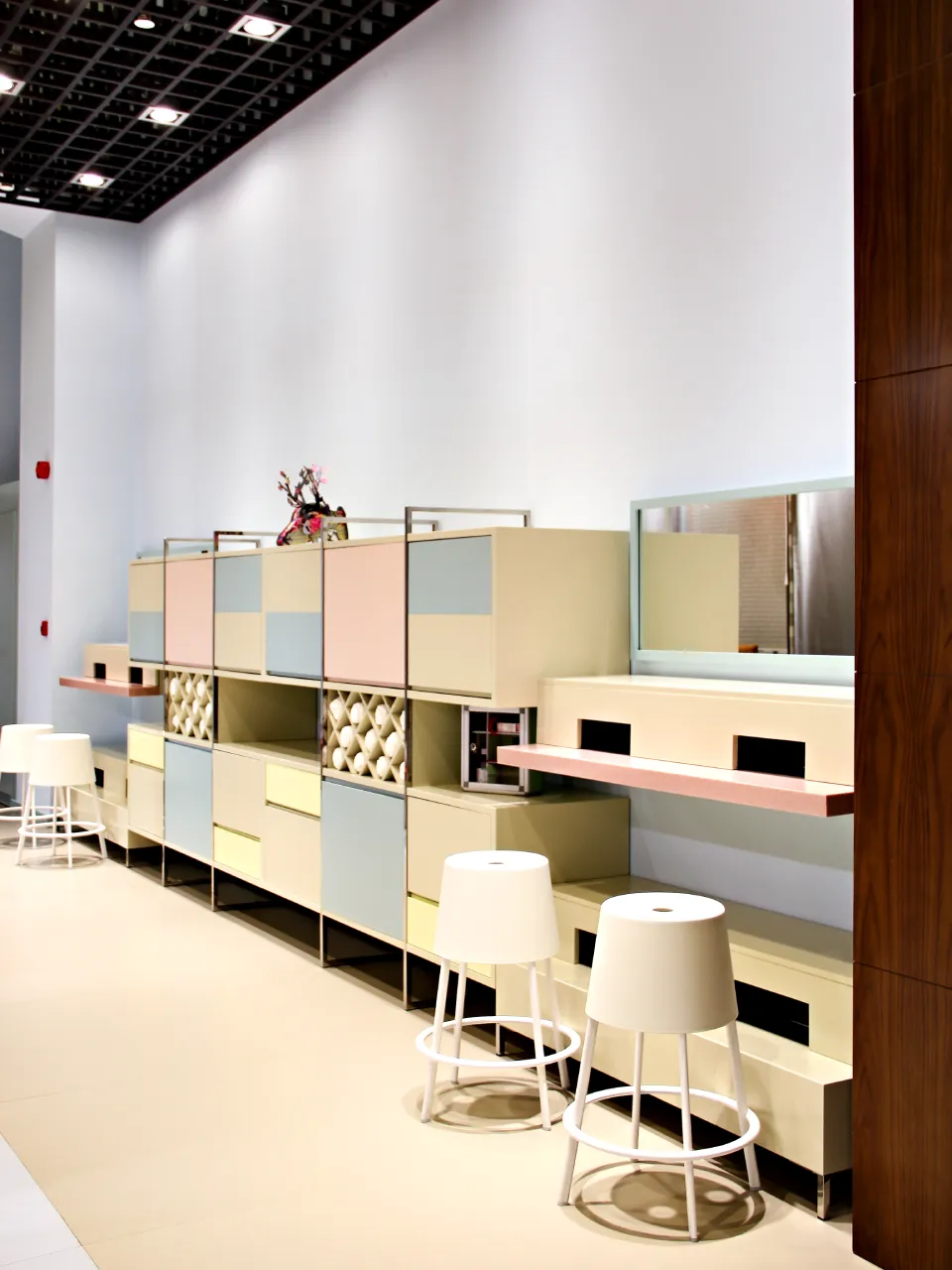
The retail and product display area uses pastel modular cabinetry in cream, pale blue, soft yellow, and light pink. The wall includes open shelves for product visibility, closed storage for less attractive items, counter surfaces, stools, and framed display niches.
This part of the design is important because salons need a large amount of storage. Tools, towels, retail products, professional products, and service items can easily create visual clutter. Here, storage is designed as part of the interior concept. Some products are displayed, while others are hidden behind closed fronts.
The long counters can support consultations, product testing, preparation, or short client seating. The pastel colours bring a playful beauty-related tone, while the clean modular layout keeps the area organised.
The black grid ceiling continues above this area, connecting it visually with the manicure zone. A warm wood wall panel adds contrast and prevents the pastel joinery from feeling too flat or artificial.
Color Palette: Soft Neutrals with Clear Accent Moments
The salon uses a varied colour palette, but each colour has a purpose. White and off-white surfaces keep the salon bright and clean. Grey chairs and equipment create a professional base. Yellow chairs bring warmth to the manicure area. Red furniture and the red mirror give the lounge a memorable identity. Pastel cabinetry supports the retail zone, while floral murals add soft pinks, greens, and natural tones.
This use of colour helps separate the functions of the salon. The client does not experience one repetitive interior; instead, each zone has a mood that matches the service offered there.
The colour choices also help the salon feel fresh and visually connected to beauty services. The interior avoids a heavy luxury approach and instead uses expressive colour, wall art, curves, and light to create a boutique salon atmosphere.
Lighting That Supports Beauty Services and Atmosphere
Lighting is one of the most important parts of this salon design. Beauty services require visibility, but clients also need flattering and comfortable light. The project uses several lighting types to support both needs.
The styling area uses track lighting and spotlights for practical work. The manicure area uses lights integrated into the black ceiling grid for focused service illumination. The treatment room uses concealed LED lighting for a softer mood. Product shelving and display areas are highlighted to improve visibility and presentation.
This layered lighting approach helps the salon feel professional throughout the day. It also allows different zones to have different atmospheres while still belonging to one interior concept.
Finishes and Materials for a Commercial Salon Interior
The finishes are selected with both appearance and daily use in mind. Large-format pale floor tiles help reflect light and make the salon easy to clean. Painted walls are combined with decorative mural surfaces for identity. Metal mirror frames and chrome salon chair bases provide durability and a professional finish. Upholstered seating brings comfort and colour.
The pastel cabinetry appears designed for both display and storage, while the black ceiling grid adds architectural character. Warm wood details in chairs, counters, and wall panels help balance the cooler salon equipment and pale surfaces.
This mix of materials gives the salon a commercial level of durability while still keeping the interior visually warm and client-friendly.
A Salon Interior That Works for Business
A successful beauty salon interior should support service quality, staff workflow, client comfort, retail sales, and brand recognition. This Abu Dhabi salon design works because it brings all these needs together.
The layout separates service zones clearly. The styling stations have sculptural mirrors and task lighting. The manicure area is organised for multiple clients. The treatment room feels softer and more private. The waiting area creates a memorable first impression. The product display is integrated into the client experience.
The design also gives the salon useful visual content. The red lounge, floral treatment room, oval mirror stations, and black grid ceiling all create photo-friendly moments. For a beauty business in Abu Dhabi, this can support marketing, social media presence, and client memory.
Conclusion
This beauty salon interior design in Al Qana, Abu Dhabi shows how a commercial salon can be planned as both a working service environment and a boutique client space. Every design decision supports a purpose: mirrors improve function and identity, lighting supports precision and mood, color separates zones, murals create atmosphere, and storage becomes part of the interior design.
The project combines practical salon planning with expressive visual details, creating a space that feels professional, welcoming, and memorable. It is a salon designed for the full experience around beauty services — from waiting and consultation to styling, treatment, product display, and brand impression.